New Drips After Hail
Inside The Building
Leaks show up in bays that stayed dry for years, right after a storm.
On The Roof
Hailstones knocked fastener seals loose and cracked the factory finish around screw heads.

As a Seymour metal roof coating contractor, we check storm-hit steel roofs, record the damage, repair it, and coat the roof in sections.
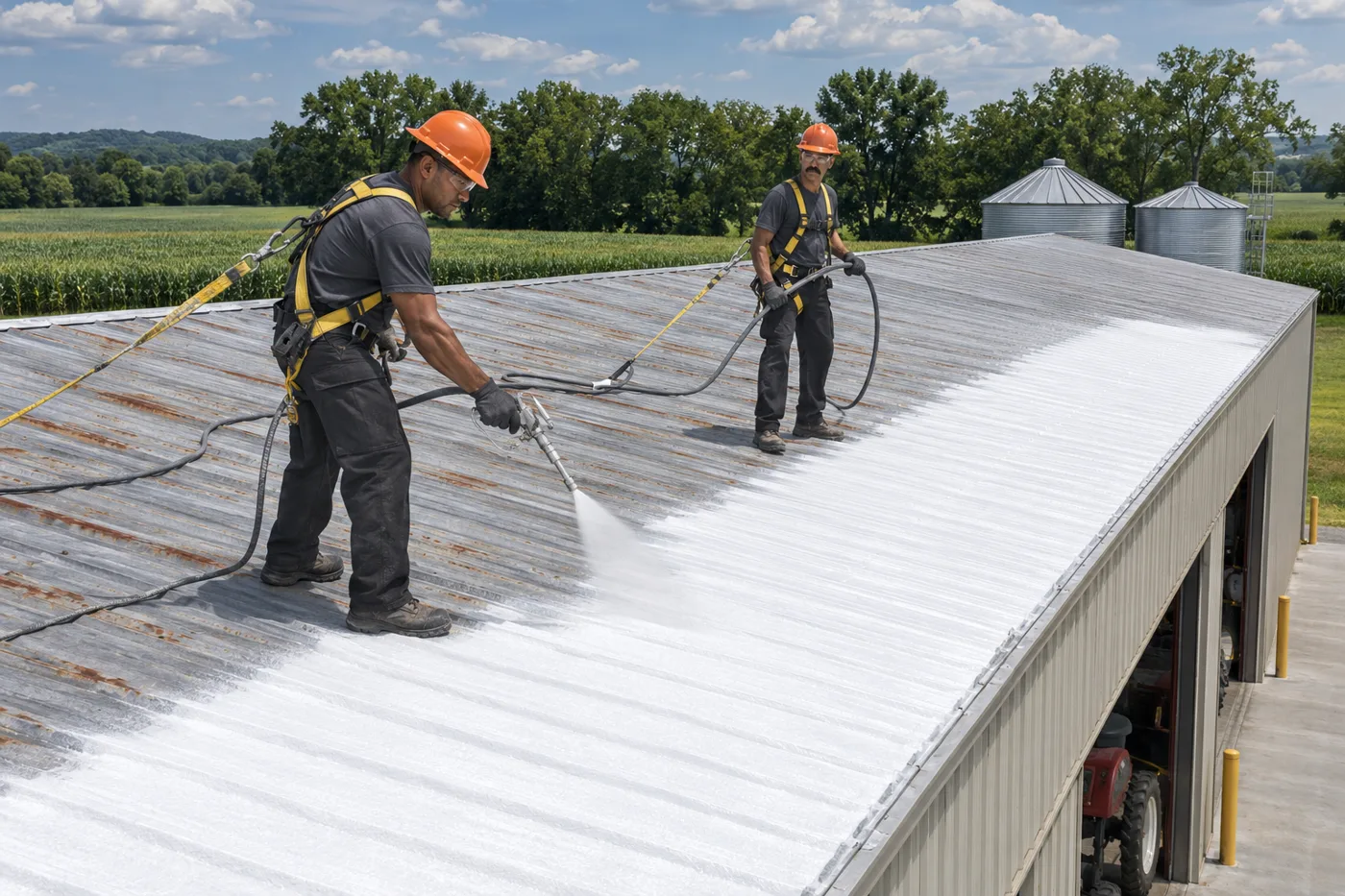
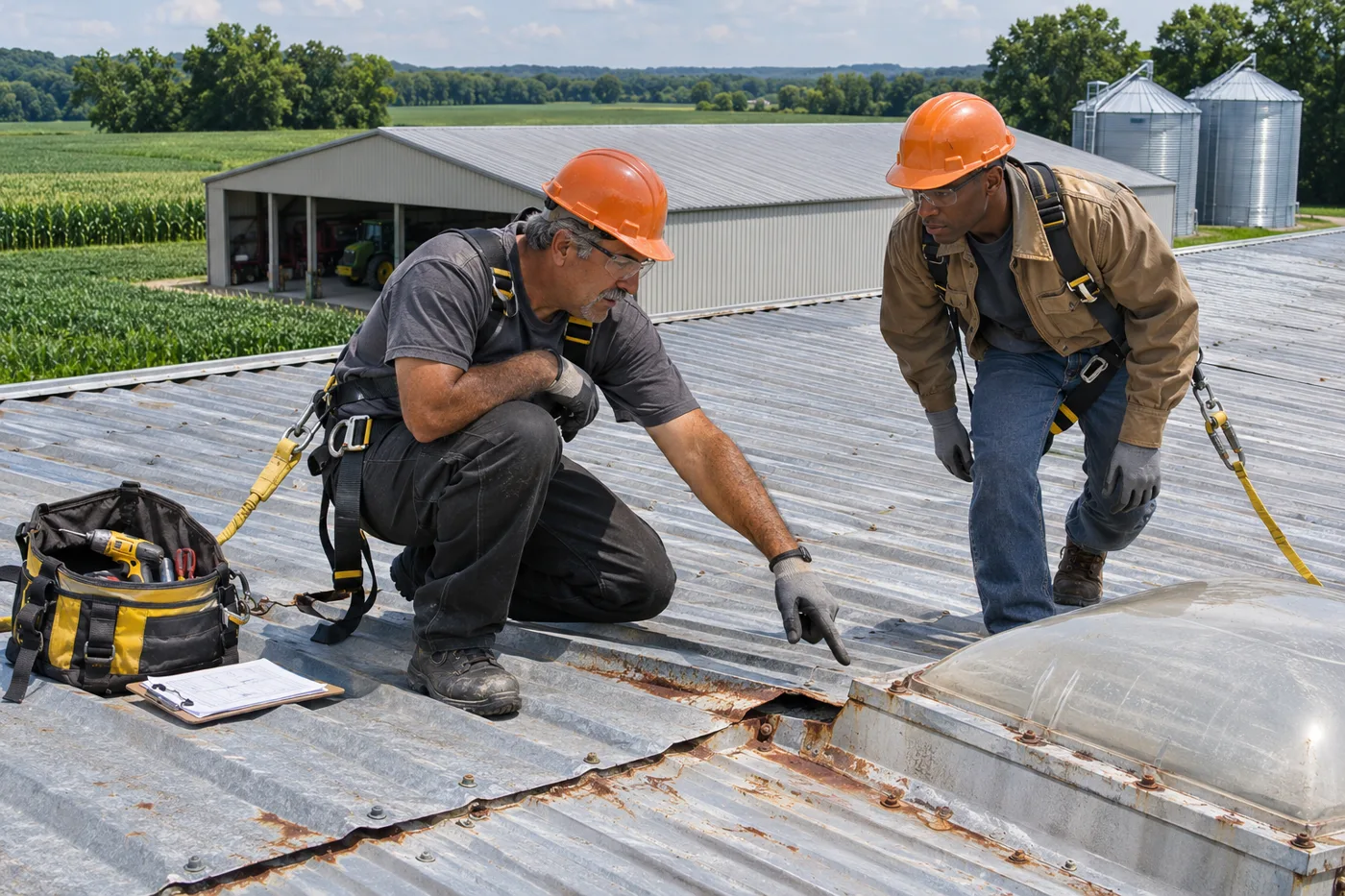
Seymour metal roof coating work often starts after a storm. Hail can split lap sealant and crack fastener seals on warehouse and plant roofs even when the dents look shallow from the ground.
We walk the roof, photograph each damaged area with the date, and mark it on a roof sketch. Repairs come first, and the coating goes over a roof that is closed up again.
After a storm, these signs inside a Seymour building point to specific damage on the roof.
Leaks show up in bays that stayed dry for years, right after a storm.
Hailstones knocked fastener seals loose and cracked the factory finish around screw heads.
Light shows along the top of a wall where it meets the roof.
Wind lifted rake trim and loosened its screws, so rain blows in along the roof edge.
A dark line follows a side lap across the underside of the roof.
Storm flexing pulled the lap open, and the old sealant inside it has split.
Water drips near a skylight panel and the plastic looks crazed.
Hail cracked an aging translucent panel, and water runs through the breaks into the purlin below.
Sheets of rain pour over the gutter during heavy storms.
Hail dented the gutter and wind pulled its straps, so it sags and spills against the wall.
Drips show up beside exhaust fans and vent pipes after storms with wind.
Wind-driven rain and hail cracked the boots and curb sealant, and the flashing around them has lifted.
Coating a repaired storm roof works for these Seymour building types.
Repaired laps, screws, and panels all end up under one coating after the storm work.
Dated photos and the scope show what was damaged, what was repaired, and what was coated.
Sections get coated one at a time, so docks and racks below stay in use.
Primer goes on every spot where hail cracked the finish down to bare steel.
Each system fits a different part of a Seymour building.
Storm-hit warehouse steel once panels and screws are repaired.
Flat dock canopies where water stays after rain.
Sloped shop roofs that drain within minutes.
Truck shops that need heat kept inside.
Shingle office fronts beside the warehouse.
Call and tell us where the new leaks are. We will walk the roof, date the damage, and price the repairs and coating.
Storm work follows five steps, with the record kept from the first walk.
We walk every section, photograph the damage with the date, and mark it on a sketch. You get the photos and a written scope.
Punctured or cracked panels and translucent panels come out and new ones go in with fresh screws.
Each screw near a dent gets checked and capped, and laps that flexed get stitch screws and tape.
Washing removes storm grit, and every spot of cracked finish gets primer before coating.
Coating goes on section by section so the building stays open, with thickness readings logged.
Is your building somewhere close to Seymour? Call us or send us a message, and we will tell you whether we can walk it. These are the other towns we cover.
Shop roofs with rows of translucent skylight panels.
Roofs where dew, fog, and cool nights set the coating hours.
Plant roofs with exhaust residue, degreased before any coating.
Long metal buildings where gutters and eaves set drainage.
Answers for Seymour owners dealing with storm damage and aging steel.
Yes. We coat steel roofs on Seymour industrial and warehouse buildings, often after storm repairs. Big roofs get fastener work along every purlin line and reinforcement at end laps, and we coat in sections so the building stays dry and in use.
Our published range runs about $2.50 to $4.00 per square foot to coat and about $5 to $8 to replace. Storm repairs, panel replacements, the number of screws and laps to rework, the coating system, and lift access decide where a Seymour roof lands.
We coat in sections and plan around dock schedules. Lifts and materials stage away from truck lanes, and the section over an active dock gets done when traffic is lightest. You know which section is next before each workday starts.
We photograph damage with the date, mark each spot on a roof sketch, and list the repairs in a written scope. That record is yours to share with an adjuster. The claim decision belongs to your insurer.
Panels with holes, cracks, or crushed ribs get replaced. Panels with shallow dents and cracked finish can be primed and coated once the screws and laps around them are resealed. The walk sorts each panel into one group or the other.
As soon as new leaks show up, or before the next big rain if the storm brought hail. Early photos make the damage record clearer, and temporary sealing can keep water out until the full repair and coating are scheduled.
Yes. We split the roof into sections and finish one before moving to the next, so racks, docks, and offices below stay usable. Lifts and pails stage away from truck lanes, and you get a daily note on which section is being coated.
Tell us when the storm hit and where water shows up, and we will walk the roof and price repairs plus coating.