Ready To Coat
- Panels
- Firm, with surface rust only
- Screws
- Snug heads, washers intact or replaceable
- Laps
- Tight, with light staining
- Insulation
- Dry under the panels
- Next Step
- Repairs, primer, and coating

As a Columbus commercial metal roof coating contractor, we restore steel roofs on plants, warehouses, and shops in place, starting with every screw and lap.
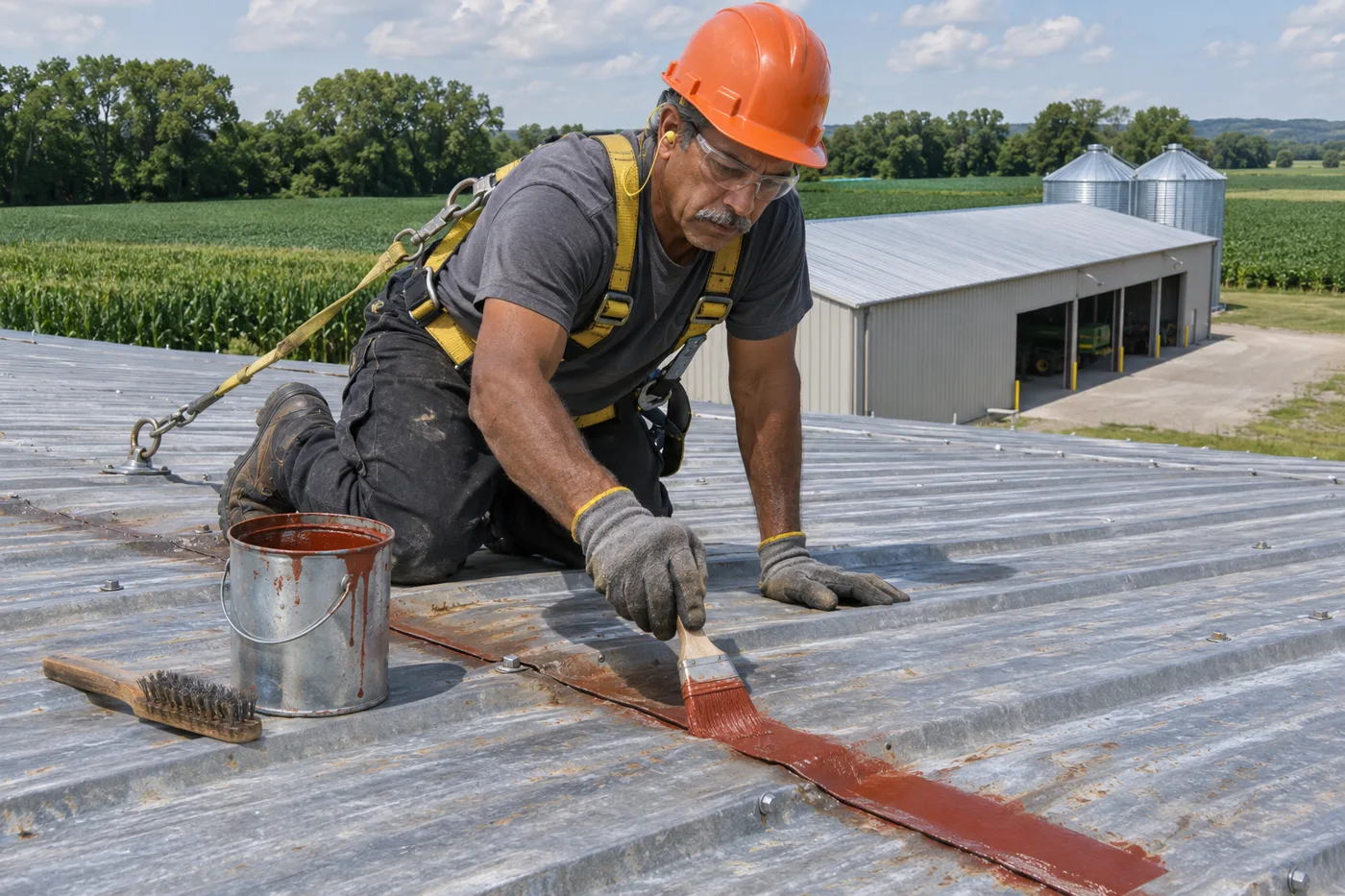
Columbus commercial metal roof coating works on steel that still holds its shape. Compare your roof with both cards before planning the job.
Plant and warehouse roofs show their trouble inside first. Here is what each sign usually traces back to on the steel.
Puddles form in neat lines across the floor after rain, often under the same purlin.
Screws along that purlin have loosened from years of heating and cooling, and their washers have split.
Brown stains run down the inside face of the wall girts near the roof edge.
Panel ends sitting in the gutter have rusted from the cut edge back, and the end lap above them has opened.
Ceiling tiles sag or stain in a ring right beside an exhaust fan or roof vent.
Curb flashing has pulled away, and oily exhaust film keeps sealant from holding on the metal around it.
Leaks appear in spots that stayed dry for years, right after a hail or wind event.
Hail cracked the factory finish, split lap sealant, and knocked fastener seals loose even where dents look shallow.
Clear panels look yellow from below, and water runs down the purlin next to them.
Old translucent panels have cracked around their screws, and the laps to the steel beside them have opened.
Icicles hang from the roof edge and water drips inside the wall line during thaws.
Meltwater refreezes in a clogged gutter and backs up under the bottom end lap, where the panel meets the gutter.
Steel coating is the base system here. The other four fit specific parts of Columbus buildings.
Whole steel fields with leaking screws, rusty laps, and chalky paint.
Flat dock roofs or additions where rain sits for days.
Steep steel that drains in minutes, at lower material cost.
Cold or hot buildings that leak at many laps.
Office wings with asphalt shingles beside the steel shop.
Coating a steel roof in place earns its cost on these building types.
Hundreds of screw heads and laps go from moving gaps to sealed details under one film.
Primer over cleaned steel and a coating over the primer keep moisture off bare metal.
A white topcoat reflects summer sun that would otherwise bake the panels and the space below.
Nothing comes off the roof, so lines, racks, and loading docks keep working throughout.
Call and tell us where the drips land. We will trace them to the screw rows overhead and price the repair with the coating.
Every steel roof moves through the same five steps, in this order.
We pick at rust, pull-test screws, and photograph every lap and curb. A roof sketch marks what gets repaired, and the scope lists those repairs apart from the coating.
Loose screws get driven, stripped holes get a larger screw, and missing ones get added. Each head then gets a cap of sealant.
Side laps get stitch screws to pull them tight. End laps and gapped joints get butyl tape and fabric set in base coat.
Pressure washing removes chalk and grime. Rust gets brushed to firm steel and primed so the coating bonds to clean metal.
Base coat goes on the details, then the field, then the topcoat at the planned thickness, with wet-mil readings on every pass.
Some buildings need a second system on part of the roof.
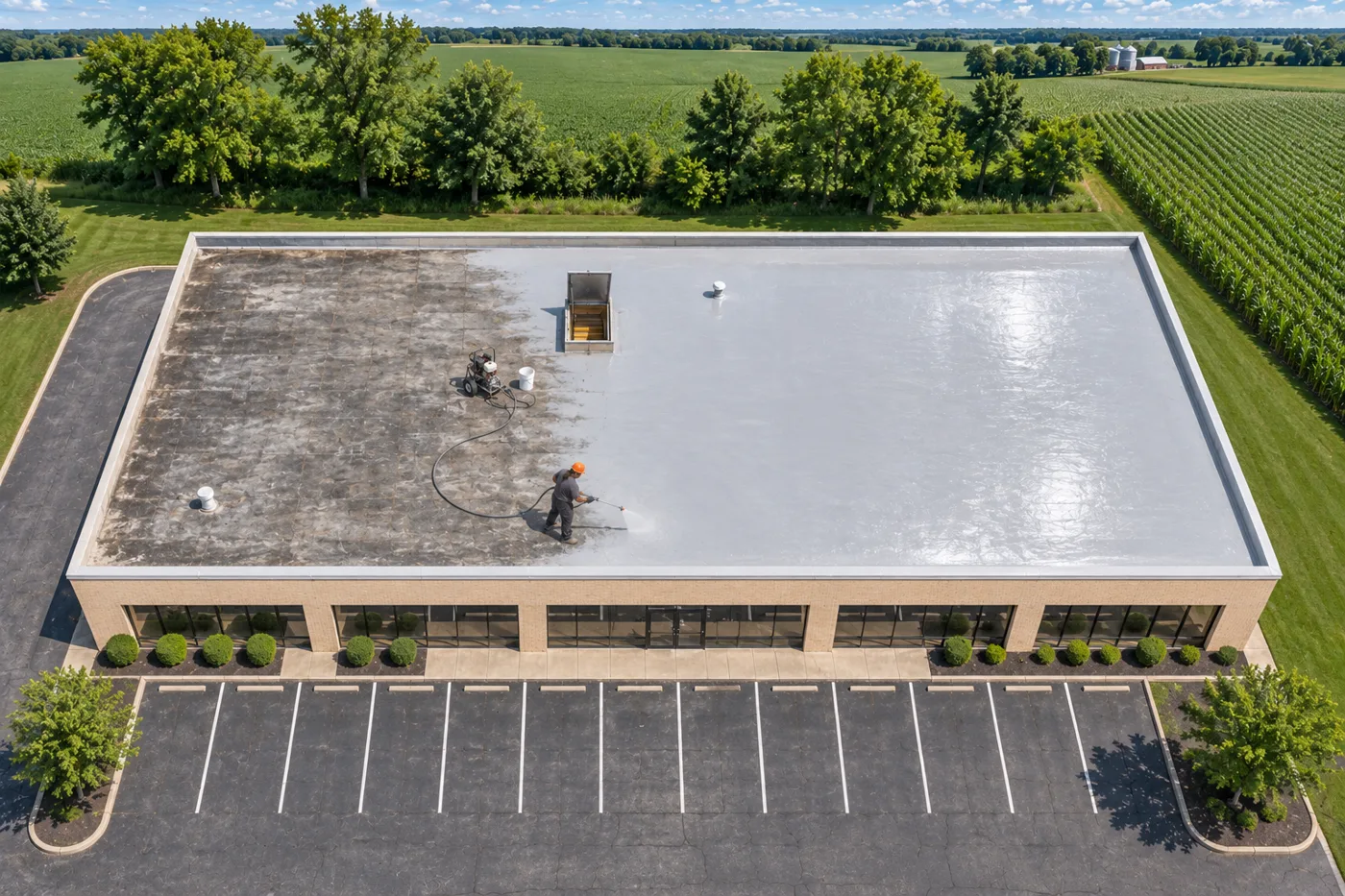
Low dock roofs and flat additions that hold water get silicone over the same sealed details.
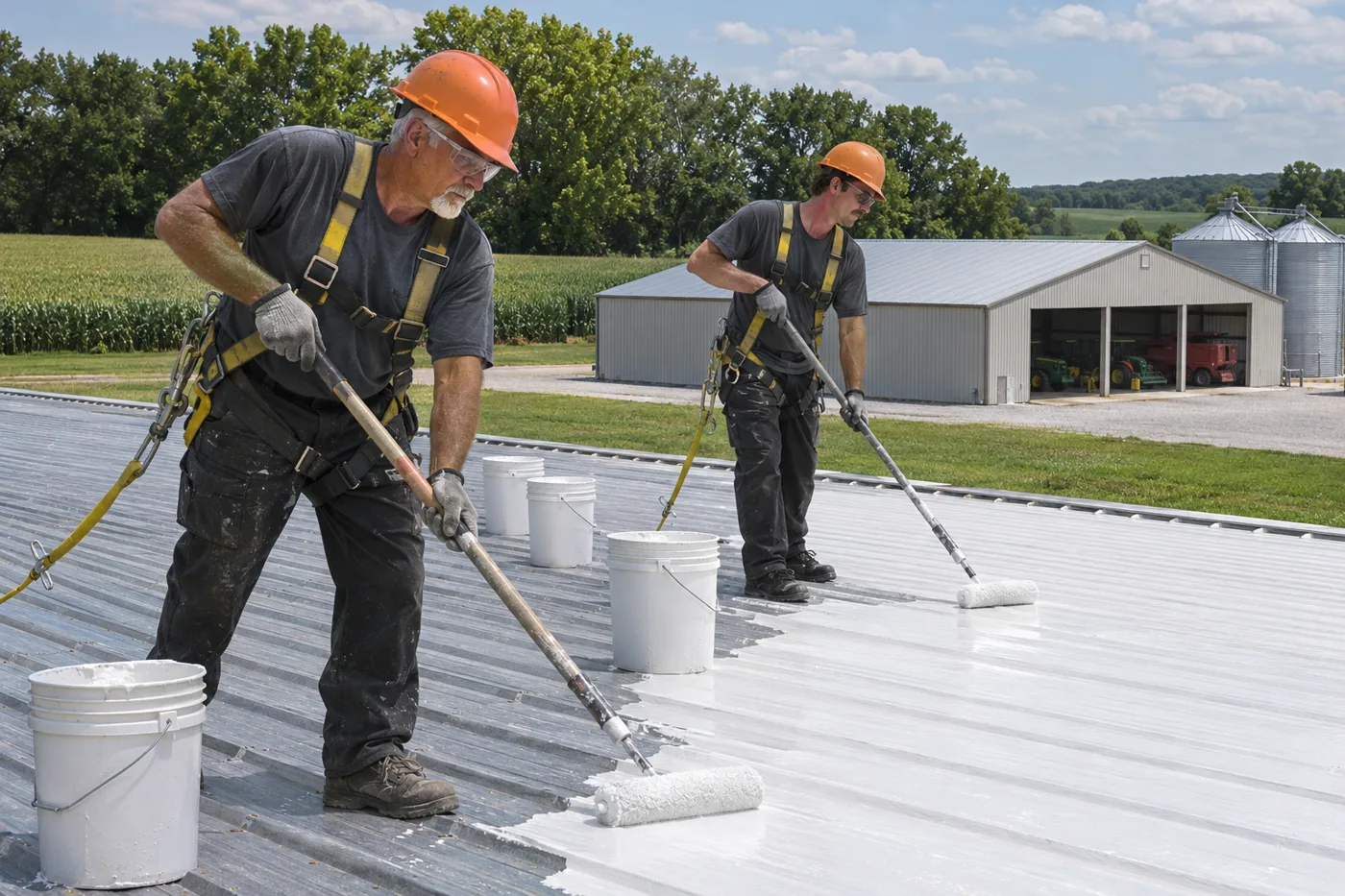
Pitched steel sections that drain quickly can take acrylic as a lower-cost finish.
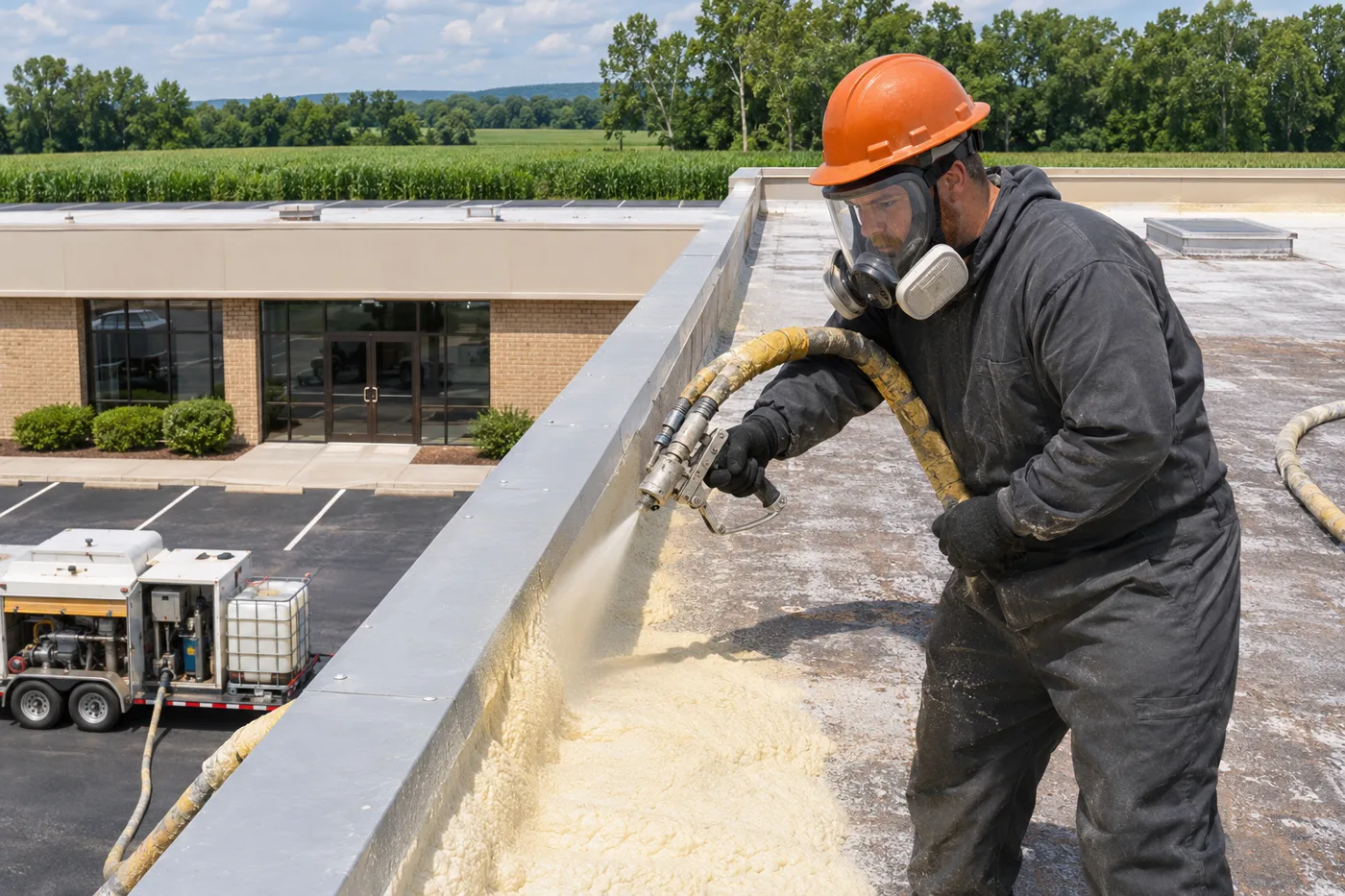
Uninsulated shops that drip in winter add foam over the panels before a topcoat.
Answers about steel roofs, written for owners and plant managers.
On low-slope steel, a thick high-solids silicone usually lasts longest, because sun and standing water do little to it. On steep panels that shed water fast, acrylic built to full thickness holds up well too. The film thickness and the prep under it matter more than the brand on the pail.
Each screw gets checked by hand. Loose ones are driven tight, stripped holes get a larger-diameter screw, and missing ones are added. Every head then gets a cap of sealant, sometimes with fabric, so the coating bridges sealed points instead of moving gaps.
It is, once the damage is repaired. Hail splits lap sealant and breaks fastener seals even when dents look small. We photograph and date the damage for any claim, replace punctured panels, reseal screws and laps, and then coat over a repaired roof.
Our published range is about $2.50 to $4.00 per square foot to coat and about $5 to $8 to replace. Rust treatment, the number of screws and laps to rework, the coating system, film thickness, roof size, and lift access move a building within that range.
Yes. Standing-seam roofs have fewer exposed screws, so the work shifts to the seams, clips at the eaves, trim, and penetrations. Seams that have opened get sealed and reinforced, and the field gets the same primer and coating as a screw-down roof.
The coating system sets a target dry thickness, and we measure wet thickness with a gauge on every pass so the dried film lands on target. Seams, laps, and screw heads get extra material, because those are the spots that move most and wear first.
Tell us the roof size and what the building is used for, and we will walk the steel and price each step.