Ready For Foam
- Panels Or Deck
- Fastened tight, rust on the surface
- Framing
- Carries the added weight
- Moisture
- Dry insulation and deck
- Surroundings
- Intakes and cars can be shielded
- Next Step
- Prep, foam, topcoat

As a Columbus spray foam roofing contractor, we spray closed-cell foam over steel and flat roofs, then seal it with a protective coating.
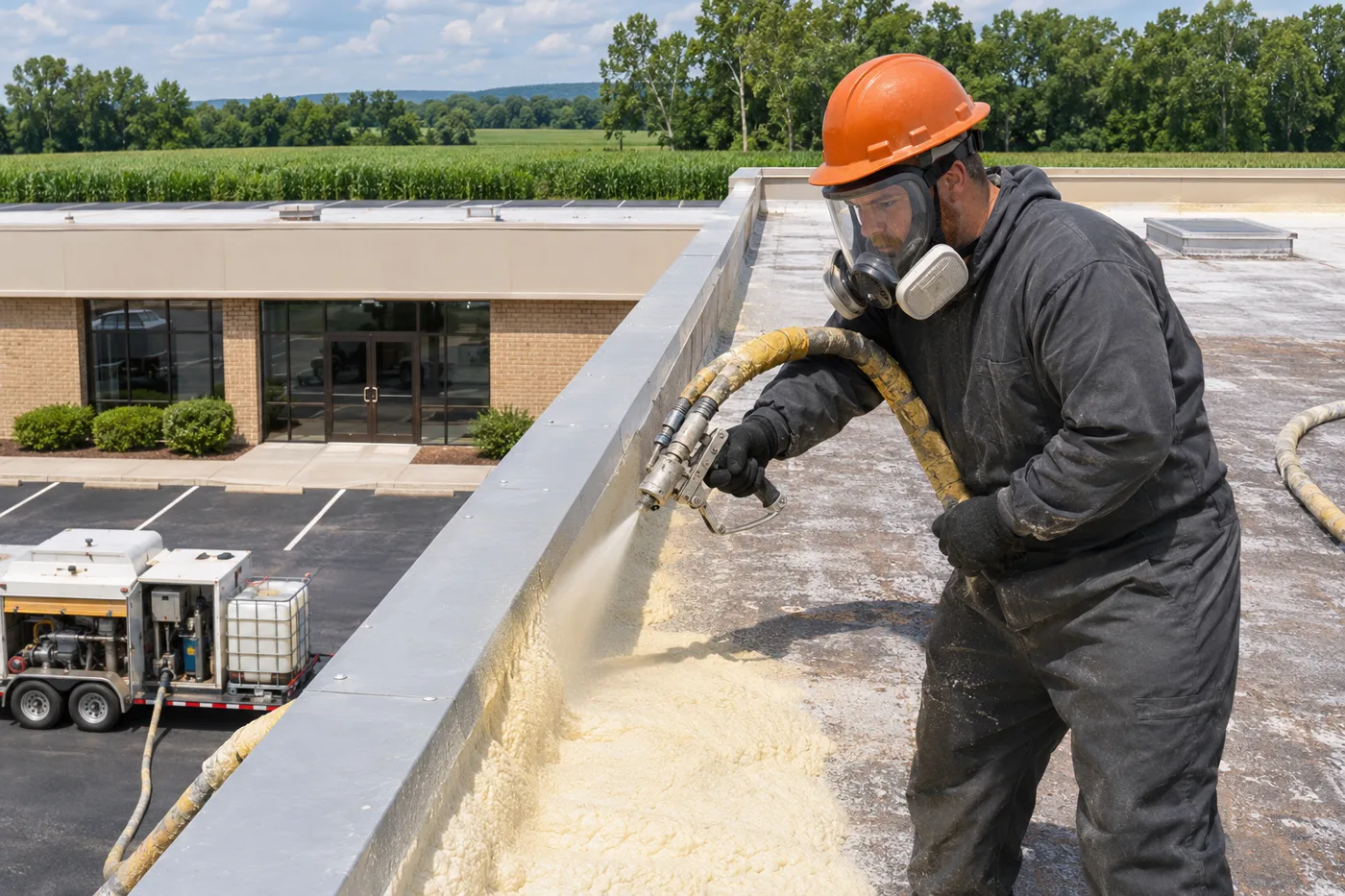
Columbus spray foam roofing works over firm panels and decks. Weigh your roof against both cards.
These signs inside a building point toward foam as the fix for the roof above.
Drips fall from the steel on cold, clear mornings with no storm around.
Warm, damp air from inside condenses on the bare underside of cold panels. Foam on top keeps that steel warmer.
Water shows up in several bays during the same storm, all along lap lines.
Side laps and end laps up and down the roof have opened, and foam covers every one in a single layer.
Heaters run hard while the space near the roof stays cold.
Bare steel with little or no insulation loses heat fast, and foam adds insulation from above.
A dark wet patch sits on the ceiling under one flat spot.
A low area on a flat roof traps rain, and foam sprayed thicker there slopes the water toward a drain.
Leaks cluster around pipes, vents, and conduits through the roof.
Dozens of small penetrations each have their own failing flashing, and foam wraps them all in one piece.
Fine rust flakes settle on shelving and equipment under older panels.
Condensation has rusted the underside of the steel, and warming the panels with foam slows that process.
Foam is one of five systems we use around Columbus. Each fits a different roof.
Steel that needs screws and rust fixed, with no added insulation.
Flat sections, and the topcoat over finished foam.
Pitched steel that drains fast and costs less to coat.
Leaky ribbed roofs that also need insulation.
Shingle wings on the same property as the shop.
Foam pays off on buildings that leak in many places and lose heat through the roof.
Foam fills the ribs and covers each lap and screw in a single continuous layer.
Heat loss slows in winter, and heat gain in summer, once foam sits on top of the roof panels.
Extra foam thickness at low areas pushes water toward edges and drains.
Warmer roof panels mean fewer cold-morning drips onto stock and equipment below.
Call and tell us how many spots drip and how the building is heated. We will check whether foam fits.
Foam takes careful prep and calm weather. These five steps cover the job.
We check panel attachment, probe for wet insulation, and look at the framing. We also note air intakes, parking, and nearby buildings that need screening.
Loose panels get new fasteners, rusted sections are replaced, and the surface is washed so foam bonds to clean steel.
Rooftop intakes are shut or covered, and wind screens go up along parking and neighboring buildings to catch overspray.
Closed-cell foam goes on in passes to the planned thickness, heavier at low spots to move water toward drains.
Sunlight breaks down bare foam, so a silicone or acrylic coating goes over it the same week, with walk pads at service paths.
Foam always gets a coating, and some roofs mix systems.
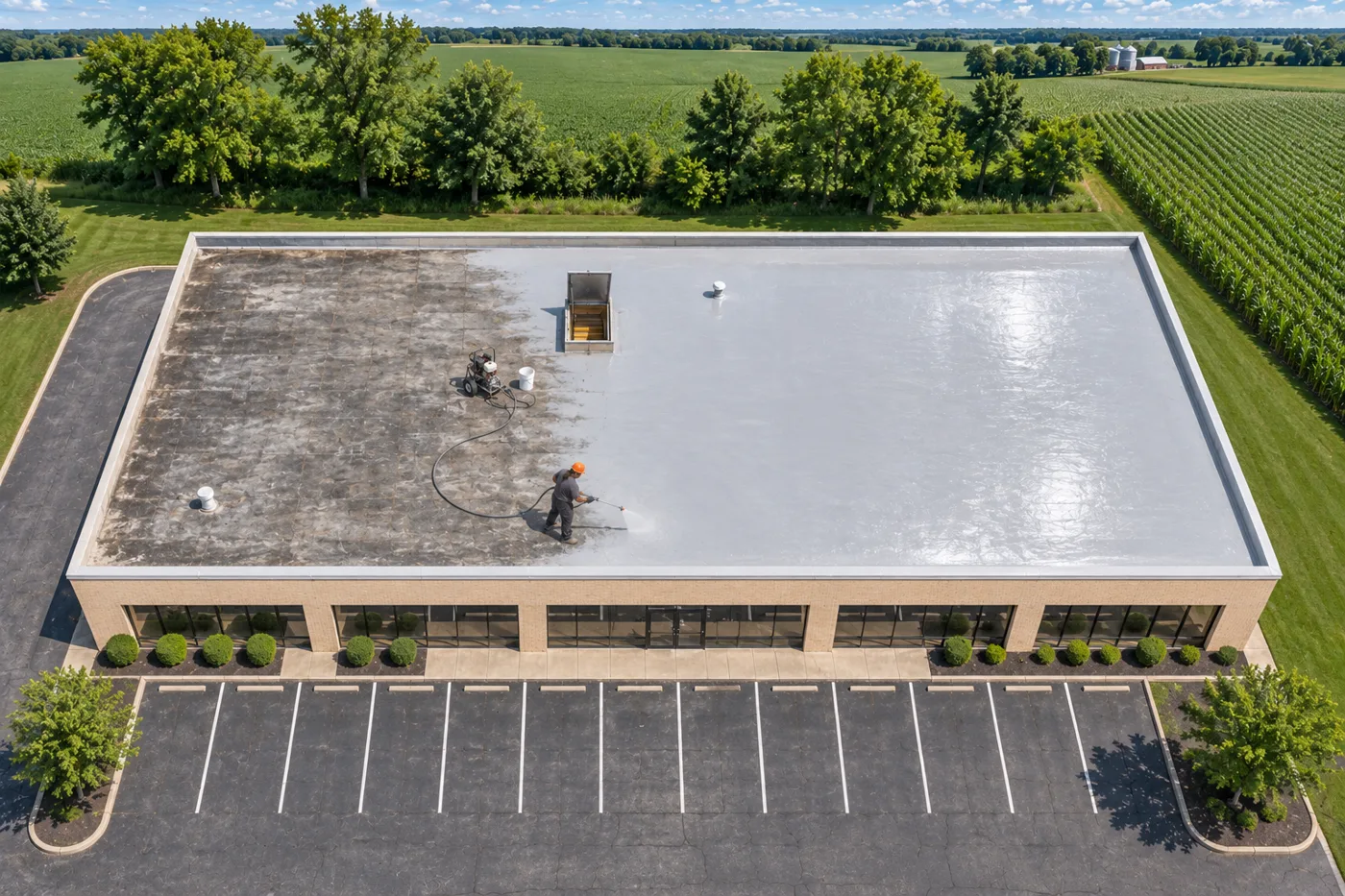
Silicone is the common topcoat over foam, sprayed thick enough to shield it from sun.
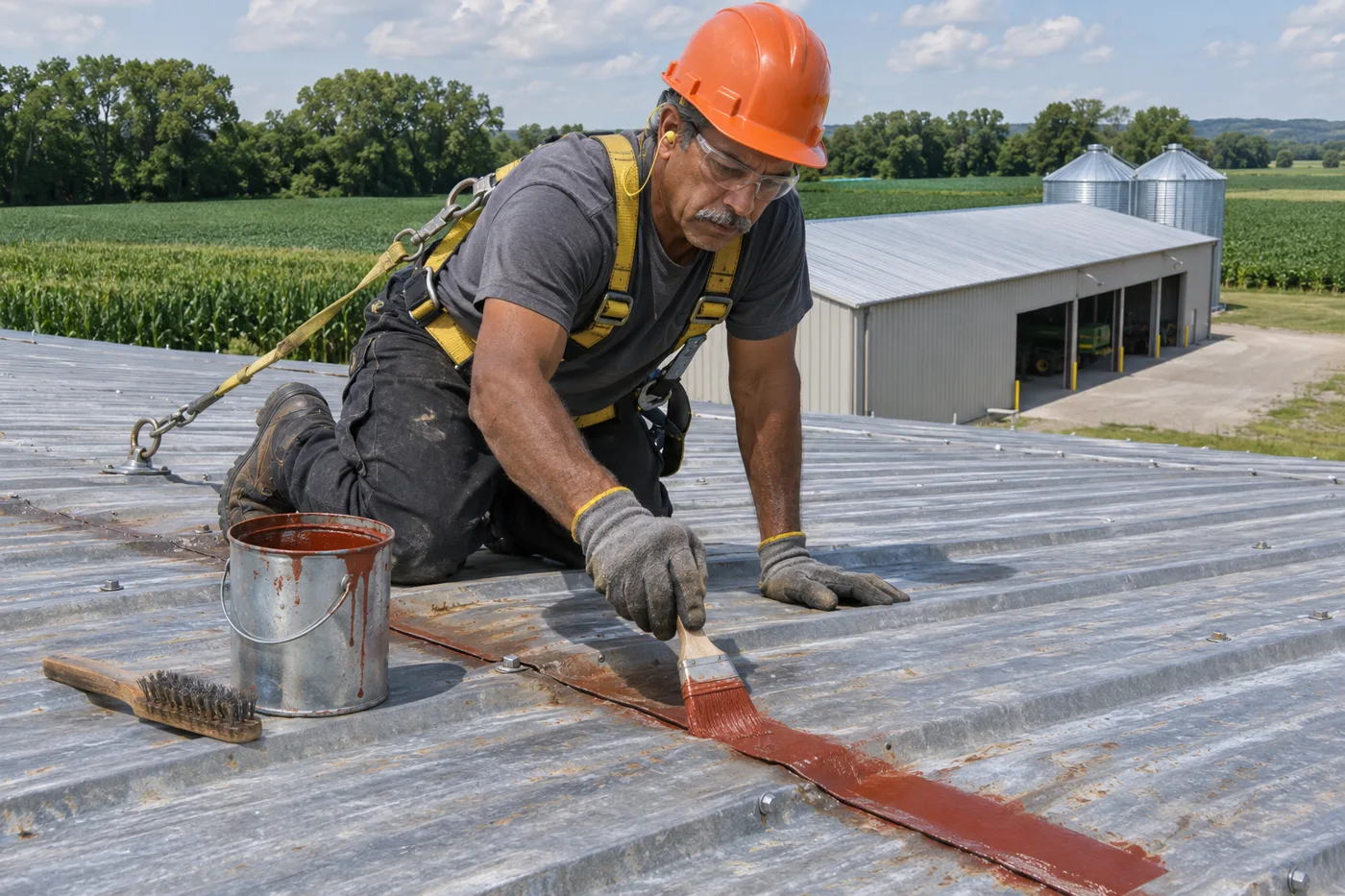
Sections that need screw and rust work but no insulation get the steel coating system.
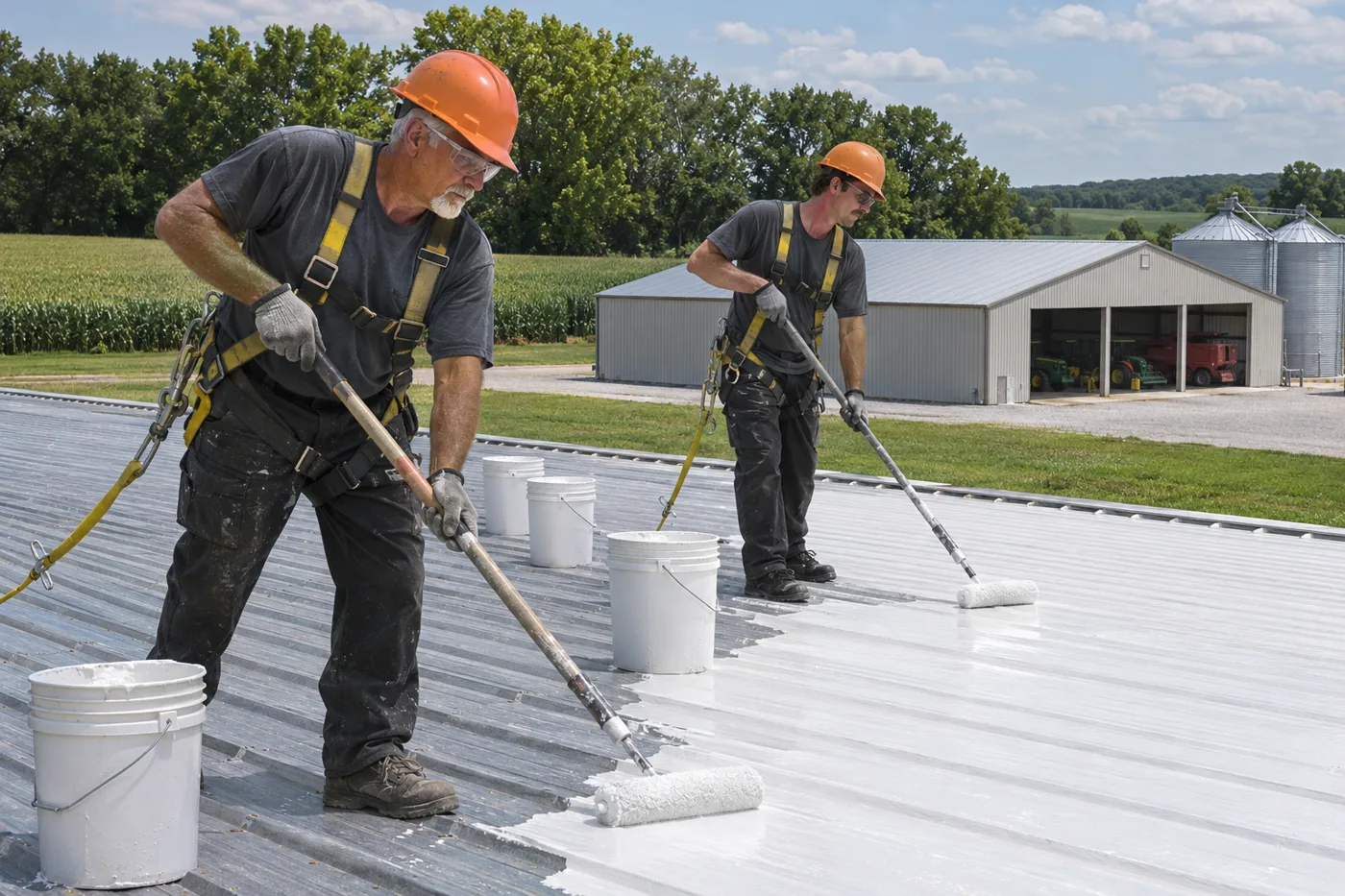
Acrylic can serve as the foam topcoat where the roof sheds water well.
What to know before choosing foam for a roof.
The main ones are weather limits during spraying, overspray risk to cars and nearby buildings, and the need to recoat the foam over time. We screen parking areas, spray on calm days, plan around air intakes, and keep foot traffic on walk pads.
Yes. Foam fills the corrugations, covers every screw and lap, and turns a ribbed roof into a smooth one. We confirm the panels are fastened tight and that the framing carries the foam and coating before spraying.
Foam on top of the steel keeps the panels warmer than the outside air, so less heat escapes and less condensation forms on the underside. Buildings with little or no insulation usually feel the difference first. The foam thickness chosen sets how much insulation goes on.
Foam is priced after a walk, because thickness, the topcoat, prep, and access vary a lot from roof to roof. For reference, our published coating range is about $2.50 to $4.00 per square foot and replacement about $5 to $8.
Bare foam breaks down in sunlight, so the coating over it is renewed when it wears thin. We check the topcoat on our walks, and a recoat is a wash and fresh coating, with no new foam unless damage calls for it.
Yes. A punctured or gouged spot gets cut back to clean foam, filled with new foam or a sealant made for foam roofs, and recoated. Small repairs like that are part of keeping a foam roof in service, and we look for them on every walk.
Tell us about the leaks and how the building is heated, and we will walk the roof and price foam for it.