Wet Floors On Foggy Mornings
Inside The Building
Damp spots appear on floors under the roof after foggy nights.
On The Roof
Moisture condenses on the cold underside of bare panels and drips before the sun warms the steel.
As a Madison metal roof coating contractor, we coat commercial and industrial steel roofs on days when dew, fog, and cool nights leave enough dry time.
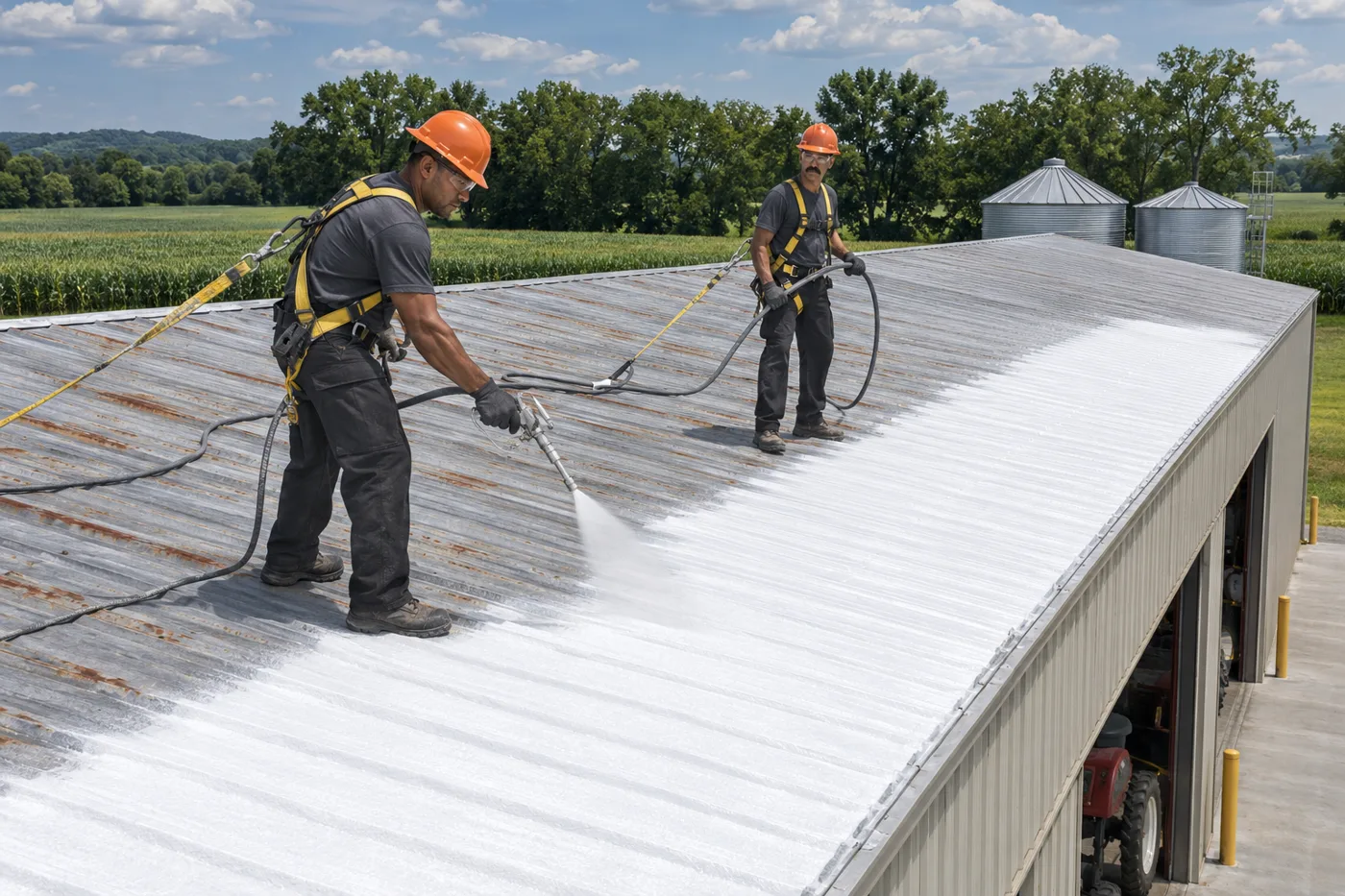
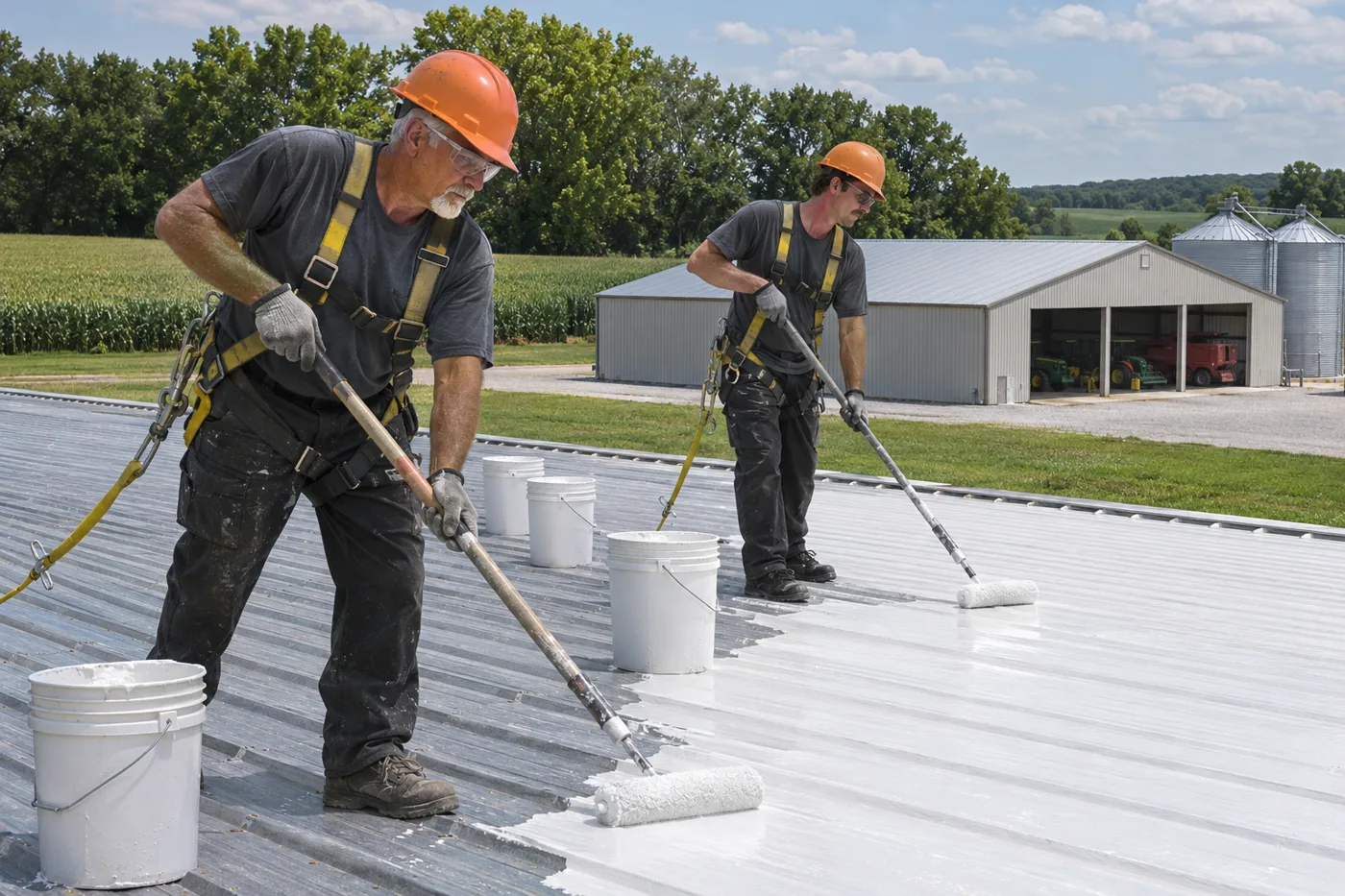
Madison metal roof coating comes down to timing. Morning dew and fog can leave the steel wet well into the day, and cool evenings bring moisture back before an acrylic coat has firmed up.
We check humidity, the dew point, and the overnight low before each workday, and start coating once the panels are dry to the touch and warm enough for the product.
Damp mornings and cool nights leave these signs inside Madison commercial buildings.
Damp spots appear on floors under the roof after foggy nights.
Moisture condenses on the cold underside of bare panels and drips before the sun warms the steel.
Rust dust collects on stored goods and shelving below the roof.
Repeated condensation has started rust on the underside of panels near the eaves.
Chips of old roof coating land in gutters and on the walks.
A past coat went on a damp roof or too late in the day and never stuck fully.
Rows of drips line up under the purlins during long rains.
Washers have cracked and screws have backed out, so each one lets a little water through.
Green growth shows along the outside of the roof edge.
Shaded eaves stay damp for long stretches, and debris in the gutters holds water against the steel.
White powder rubs off on your hand from a roof coated only a few years ago.
A coat applied thin or in poor weather breaks down faster, and the topcoat needs a wash and fresh coat.
Well-timed coating pays off on these Madison building types.
Coats that go on dry steel and firm up before dusk stay stuck to the roof.
Foam over bare panels keeps steel warmer and cuts the drips from condensation.
Primer and coating keep moisture off steel where shade keeps the eaves damp.
Capped screw heads under the coating keep long rains from dripping through.
Each system has its place on a Madison roof. Weather plays a part in the choice.
Steel roofs with rust and leaking screws, coated on dry days.
Shaded or flat sections that stay damp longer.
Sunny, pitched steel when warm, dry days line up.
Buildings dripping from condensation on cool mornings.
Shingle roofs on offices and storefronts.
Call and tell us when the old coating went on and where it is letting go. We will check the bond and price the fix.
Five steps, each one scheduled around moisture on the steel.
We test any old coating for adhesion, look for condensation damage underneath, and check screw rows and shaded eaves.
Peeling coating gets scraped and washed back to a firm edge so the new coat bonds to firm material.
Screws get replaced or capped, laps get sealed, and rust gets primed on dry, warm days.
Each morning we read the dew point, surface temperature, and overnight low before opening a pail.
Coating goes on midday and stops early enough for each coat to firm up before evening dew.
Have a building outside the towns listed here? Call us or send us a message and ask. We also coat steel roofs in these towns.
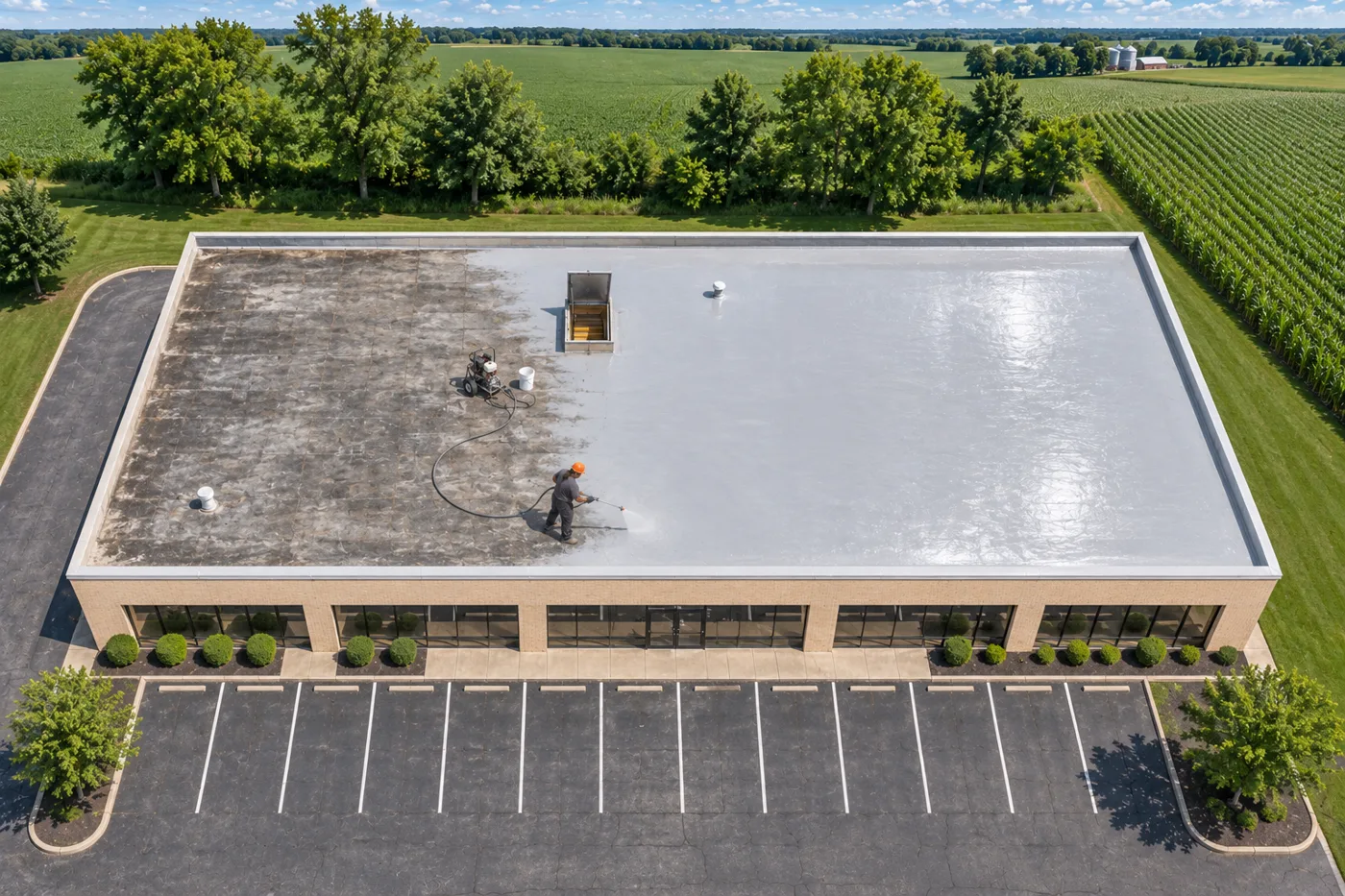
Warehouse and plant roofs, plus dated photo checks after hail.
Shop roofs with rows of translucent skylight panels.
Plant roofs with exhaust residue, degreased before any coating.
Long metal buildings where gutters and eaves set drainage.
What Madison owners ask about weather, timing, and coating.
Yes. We coat commercial and industrial steel roofs in Madison. Before scheduling, we look at humidity, dew point, and overnight lows, since each one changes how the coating dries. Rust, screws, and laps get handled first, then the finish coat goes on at full thickness.
Our published range runs about $2.50 to $4.00 per square foot to coat and about $5 to $8 to replace. Removing a failed coating, rust treatment, screw and lap repairs, the coating system, and access decide where a Madison roof lands.
We plan every coating day around the weather. Work starts once the panels are dry and warm enough, and stops in time for each coat to firm up before evening dew. On damp stretches we wait rather than coat wet steel.
Most peeling traces back to the surface underneath. Coating sprayed on damp steel, over chalk and dirt, or too late in the day bonds poorly and lets go in sheets. We test the old coat and remove what has failed before recoating.
Call (812) 682-5826 or send the address through the contact form. We walk Madison roofs along with those in Columbus and the other nearby towns, and the first step is always a roof walk.
Silicone tolerates humidity during curing and handles damp, shaded sections well once it sets. Acrylic needs dry, warm hours to cure, so it suits sunny, pitched panels that dry out early in the day. Many Madison roofs get silicone on some sections and acrylic on others.
We watch the forecast closely and stop early when rain is coming. If an unexpected shower hits a fresh coat, we check that section once it dries, and any area that washed thin gets cleaned and recoated before the job moves on.
Tell us how the roof behaves on damp mornings, and we will walk it and plan coats around the weather.