Ready For Coating
- Shingles
- Flat and firmly sealed
- Deck
- Firm underfoot
- Flashing
- Repairable at walls and pipes
- Venting
- Air moves under the deck
- Next Step
- Repairs, clean, coat

As a Columbus shingle roof coating contractor, we coat asphalt shingle roofs on offices, churches, and small commercial buildings after repairs.
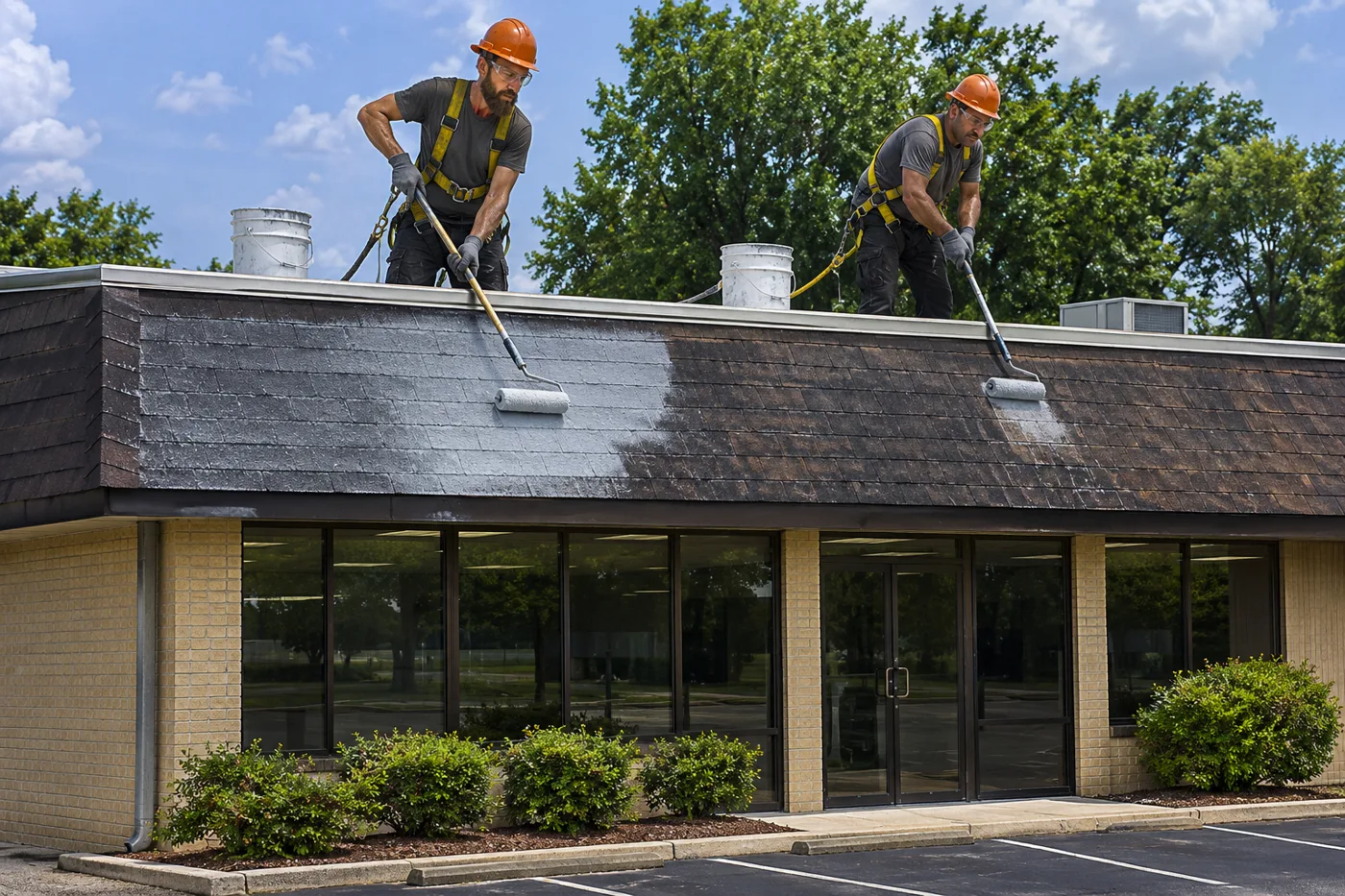
Columbus shingle roof coating has a narrow gate. Compare your roof with both cards before planning anything.
Shingle roofs on churches, offices, and front additions show these signs before coating is on the table.
Brown rings show on the ceiling under a valley or near an outside wall.
Valley flashing or wall flashing has worn, and water slides under the shingles at that spot.
Gutters and downspout outlets fill with gritty, sand-like material.
Shingles are shedding granules as they age, and the asphalt mat underneath is losing its cover.
Musty air and damp insulation show up in the attic or above the ceiling.
Venting under the deck is blocked, and coating over trapped moisture would lock it in.
A drip falls near a plumbing stack or exhaust pipe after storms.
The rubber boot around the pipe has cracked in the sun and opened a gap at the shingle line.
Pieces of shingle show up on the ground after windy days.
Tabs have lost their seal strip, and wind lifts and tears them along the roof edges.
Green growth spreads across the north-facing roof slope and stays damp for days.
Moss holds water against the shingles and lifts granules, so it gets cleaned off and the surface dries before coating.
Shingle coating is one of five systems we apply around Columbus. Each fits a different roof.
Steel shop or warehouse roofs behind the office wing.
Flat sections where water sits after storms.
Pitched steel on farm and shop buildings.
Low-slope roofs that need insulation and leak at many points.
Asphalt shingles that still lie flat on offices and churches.
Coating adds service to shingle roofs that are still in good shape on these buildings.
The coating holds loose granules in place and covers small cracks in the shingle surface.
A lighter coated surface cuts the heat a dark shingle roof pulls into the building.
A firm shingle roof that gets coated can put off a full tear-off and reroof.
Coating goes on from the roof, so worship services and office hours carry on below.
Call and describe the roof and building. We will check the shingles and tell you plainly whether coating fits.
Shingle roofs pass a strict check before anything is coated. These five steps follow it.
We check how the shingles lie, walk the deck for soft spots, and look at venting and flashing. If the roof fails that check, we say so and stop there.
Lifted tabs get sealed, missing shingles are replaced, and pipe boots and wall flashing get new pieces.
Loose granules, moss, and dirt come off with a gentle wash, and the roof dries fully before coating.
A small area gets coated first to confirm the product bonds to those shingles and the surface stays breathable.
A coating made for asphalt shingles goes on in even coats, with extra care at valleys, walls, and steeple bases.
Many shingle roofs share a property with steel or flat sections.
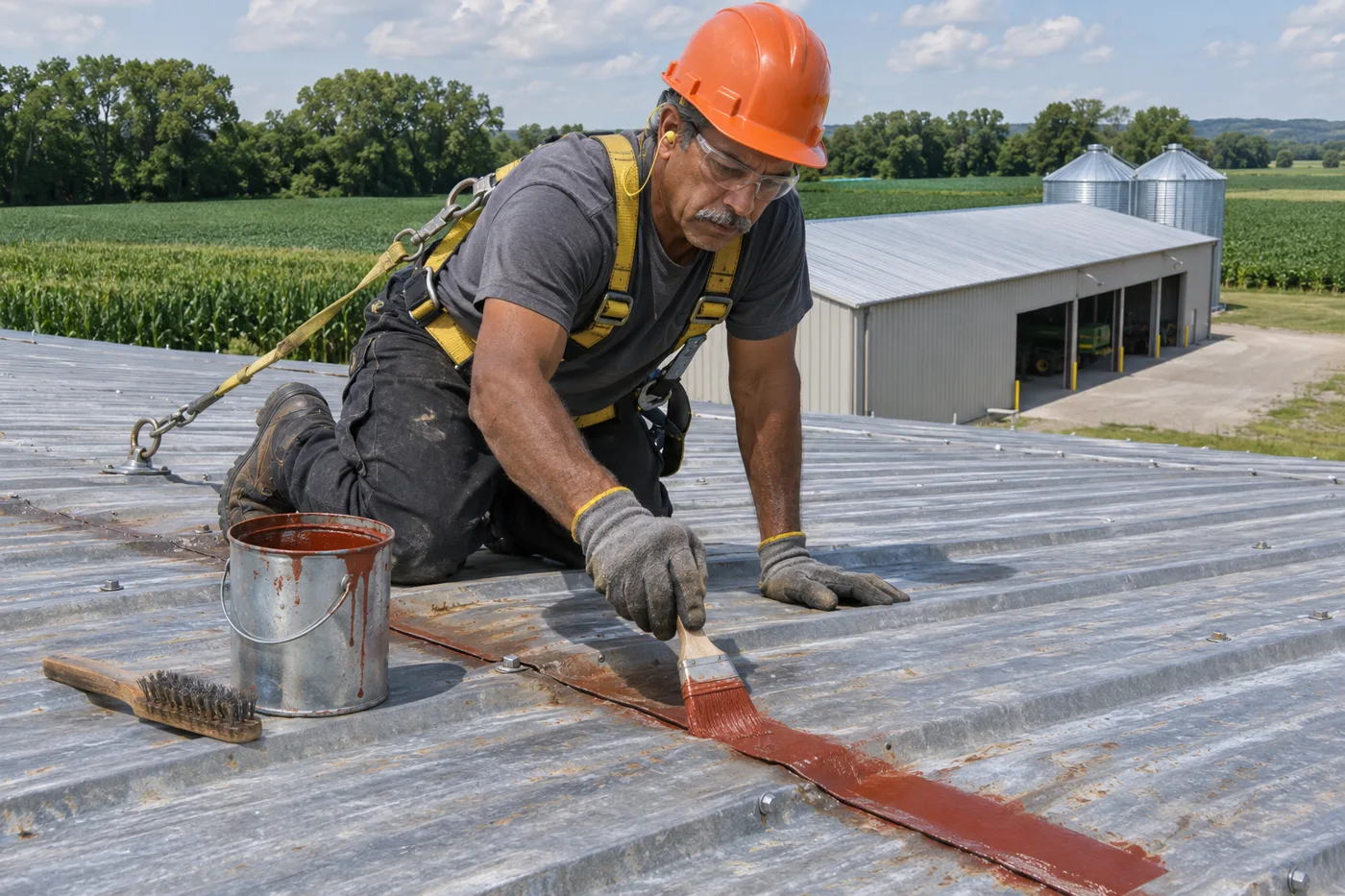
A steel fellowship hall or shop behind the main building gets the steel coating system.
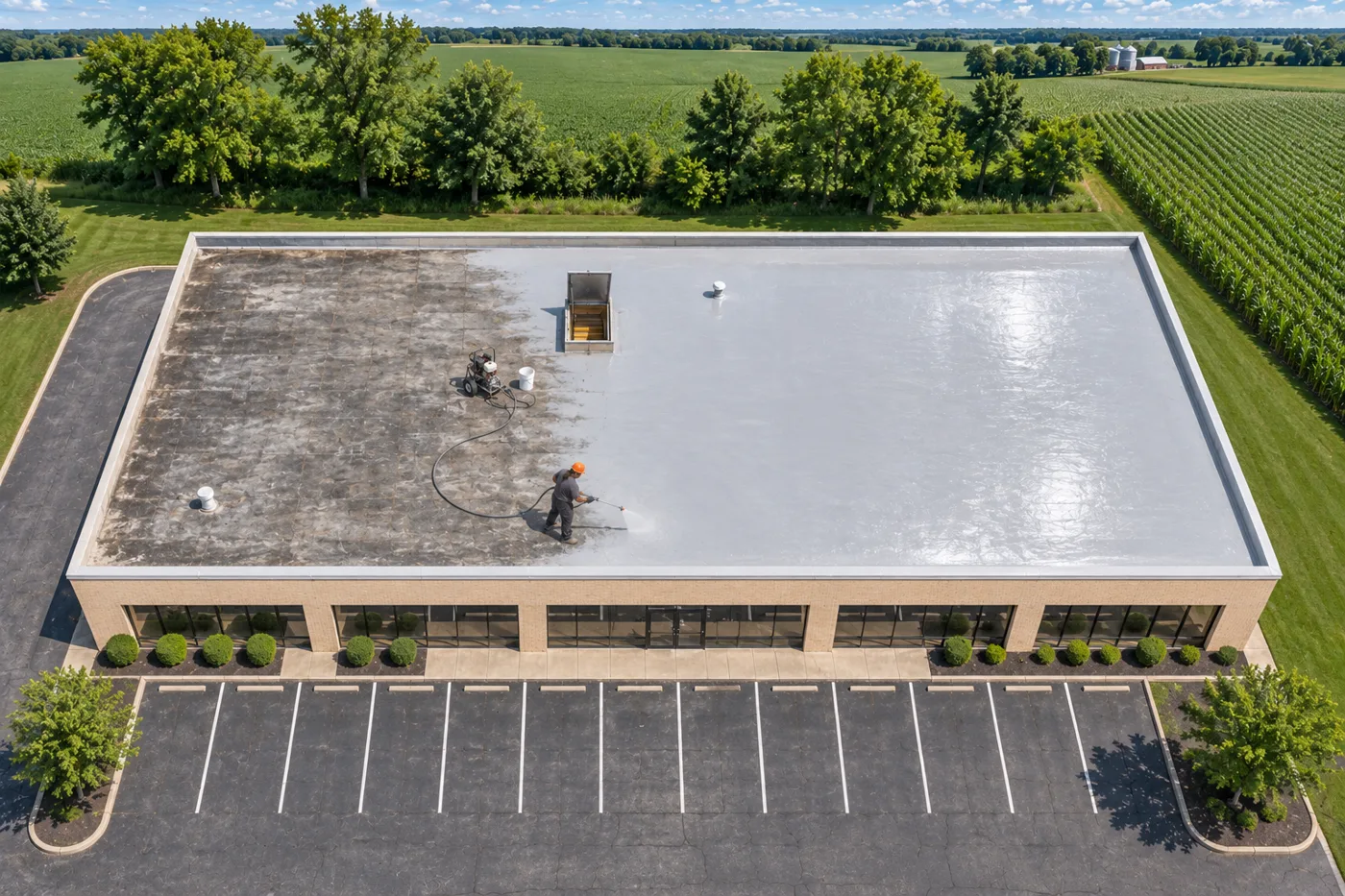
Flat connecting roofs between wings take silicone where water sits.
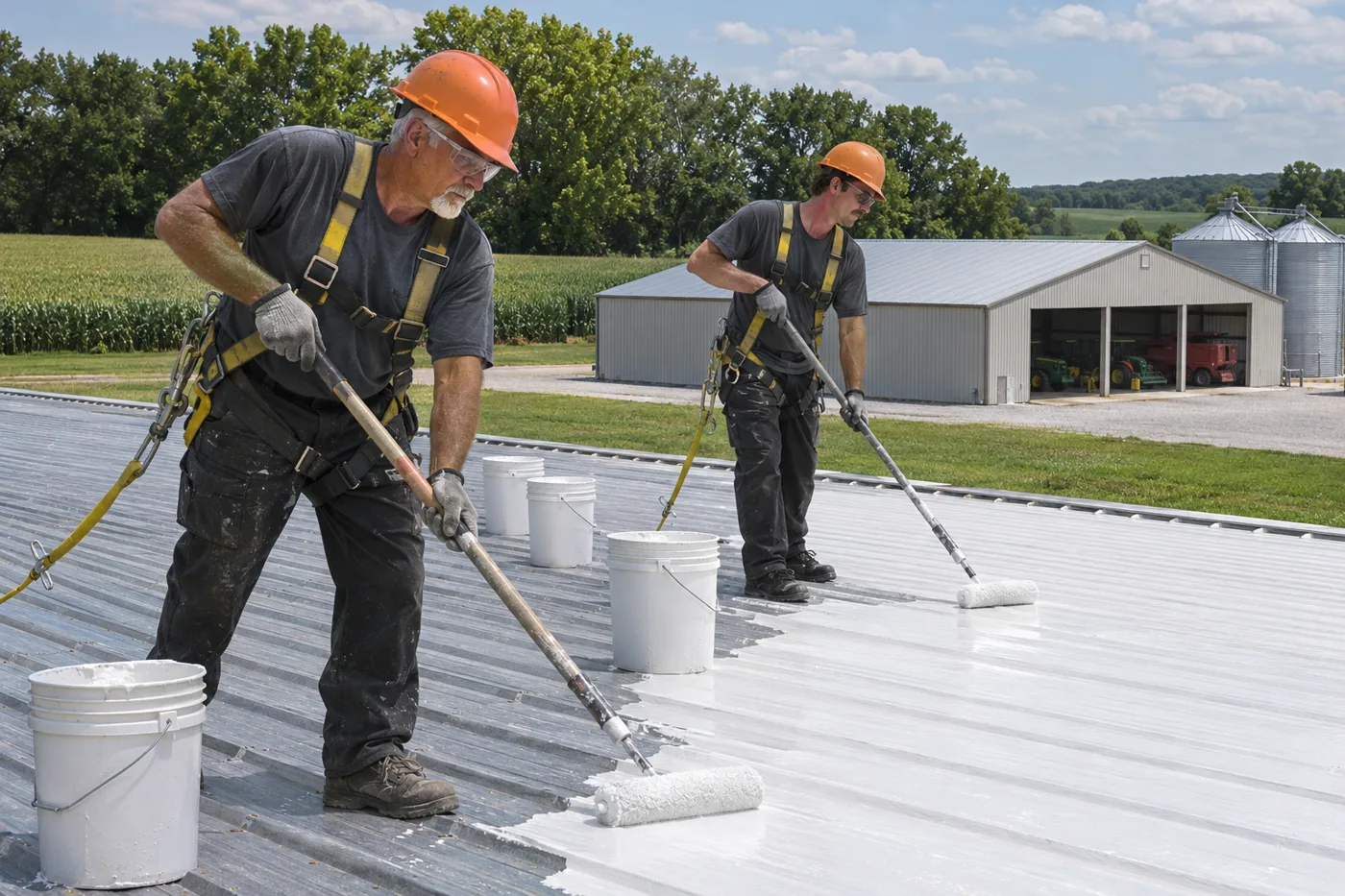
Pitched metal outbuildings on the same lot can take acrylic.
Plain answers about coating asphalt shingles on commercial buildings.
Use a coating made for asphalt shingles, usually a breathable acrylic or silicone that bonds to granules without trapping moisture. Metal roof products are never swapped in. We test a small patch and confirm venting under the deck before choosing one.
It works when the shingles still lie flat, stay sealed, and sit on a firm deck. The coating locks down granules and covers small cracks. Over curled, lifted, or missing shingles or a wet deck, it falls short, and we tell owners that after the walk.
Church roofs often have steep slopes, steeples, and long valleys, so access and fall protection come first. Damaged shingles and flashing get repaired, then the coating goes on with extra care at valleys, steeple bases, and walls. Work is scheduled around services.
Age matters less than condition. If the shingles still lie flat, hold their seal, and sit on a firm, dry deck, they can be coated after repairs. If they curl, crack across the tabs, or shed most of their granules, a reroof is the better call.
Shingle coating falls within our published coating range of about $2.50 to $4.00 per square foot, while replacement runs about $5 to $8. Repairs before coating, roof pitch, and access move the price, and the walk sets the final number.
Valleys carry the most water on a shingle roof, so we check the valley metal or woven shingles for wear and replace any worn pieces. Debris gets cleared, and the coating goes on heavier in the valleys than across the open field.
Tell us about the building and the shingles, and we will walk the roof and tell you whether coating fits.