Ready For Silicone
- Slope
- Low slope or flat
- Standing Water
- Puddles clear within a couple of days
- Old Coating
- Bare primed steel or old silicone
- Surface
- Washed and dry
- Next Step
- Prep, then spray

As a Columbus silicone roof coating contractor, we spray silicone over cleaned, primed steel and flat roof sections that keep water after rain.
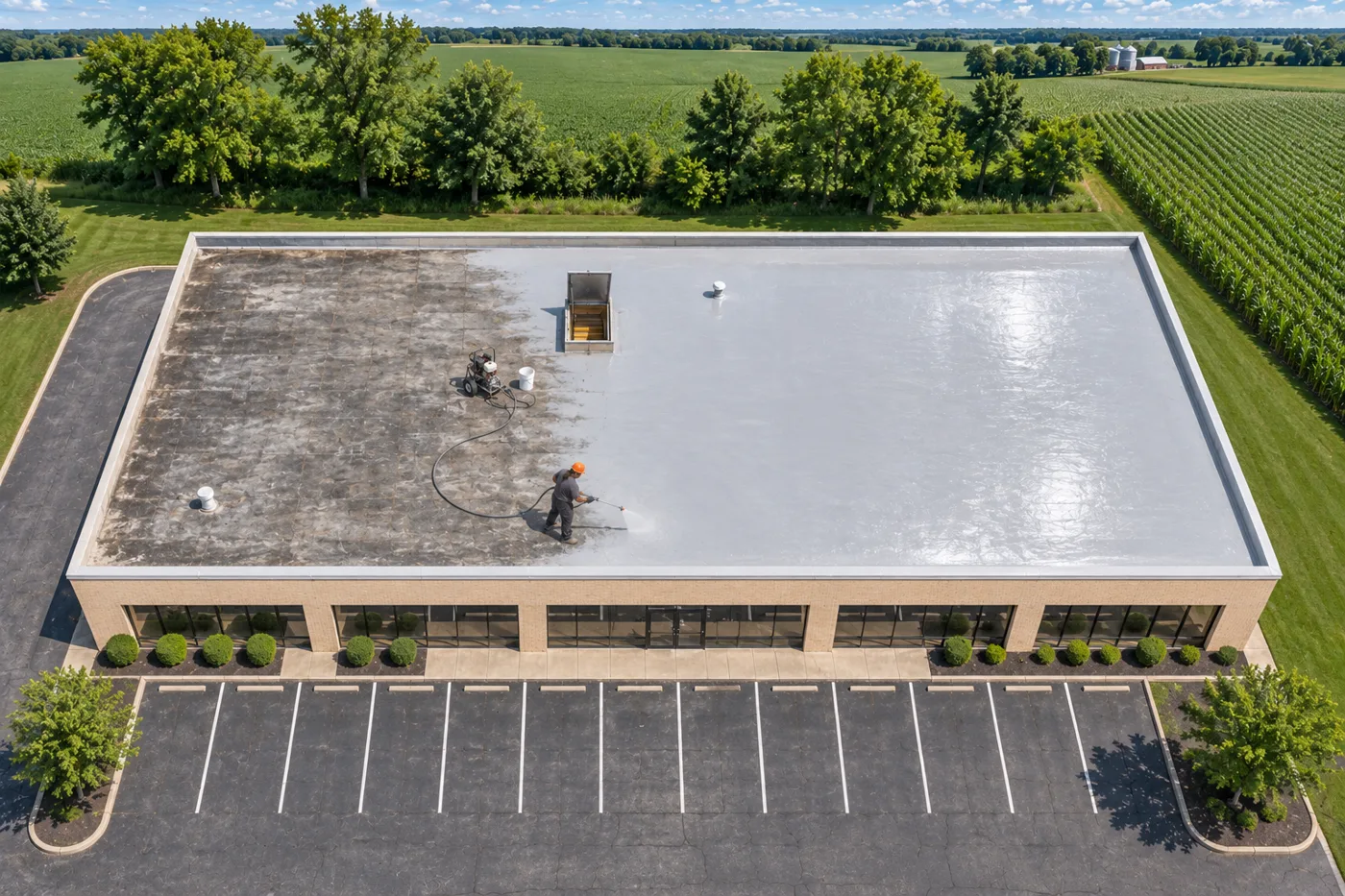
Columbus silicone roof coating goes on clean, dry surfaces that are firm underneath. Line your roof up against these two cards.
Flat and low-slope sections tell on themselves inside the building. These signs show where silicone helps and what gets fixed first.
Stains spread across the same ceiling tiles each time it rains hard.
Rain pools on a flat section with a clogged drain, and water finds an open lap under the puddle.
Water sheets down the outside wall at one corner during storms.
Leaves and grit block the gutter or scupper, so water backs up behind it and soaks the eave.
Greasy drips show up on floors beneath a fan or exhaust hood.
Grease and exhaust film coat the curb, so old sealant has let go and new coatings slide off.
Brown water marks the underside of the deck near a low corner.
Dirt rings on the roof show where water sits, and rust has started in the center of each ring.
Flakes of white coating show up in gutters and on the ground outside.
An older acrylic layer is losing its grip in low spots, and it has to come off before silicone goes down.
Drips run down the duct or land near a supply grille after storms.
Curb flashing around the rooftop unit has split at the corners, and water pools on the uphill side of the curb.
Silicone is one of five systems we apply around Columbus. Each one fits a different roof.
Steel fields where screws and rust lead the trouble.
Flat and low-slope sections that hold water after storms.
Pitched panels that shed rain within minutes.
Roofs that need insulation and built-up low spots.
Asphalt shingle wings coated with a breathable product.
Silicone earns its keep where water lingers and summer sun hits hard.
Silicone keeps its film in low spots where rain sits for a day or two after storms.
Cured silicone keeps its thickness instead of chalking away each summer on a bright roof.
Laps, screw heads, and curb corners all sit under the same unbroken layer once repaired.
A clean silicone roof takes a fresh silicone coat years later with no tear-off.
Call and tell us where the puddles sit. We will check the drains and price silicone for that section.
Silicone needs a clean, dry, sealed surface. These five steps get the roof there.
We walk the roof after rain to see where water sits, probe the deck under each puddle, and run an adhesion patch on any old coating.
Drains and scuppers get cleared and resealed. Loose screws are replaced and capped, and wet insulation under low spots is swapped out.
Washing takes chalk and dirt off the field. Fan curbs get degreased, and peeling acrylic gets scraped back to a firm edge.
Rust gets primed, and laps and curb corners get fabric set in silicone so the joints carry extra thickness.
Silicone goes on in one or two passes to the planned dry thickness, heavier in low spots, with gauge readings logged as we go.
Silicone often shares a building with one of these.
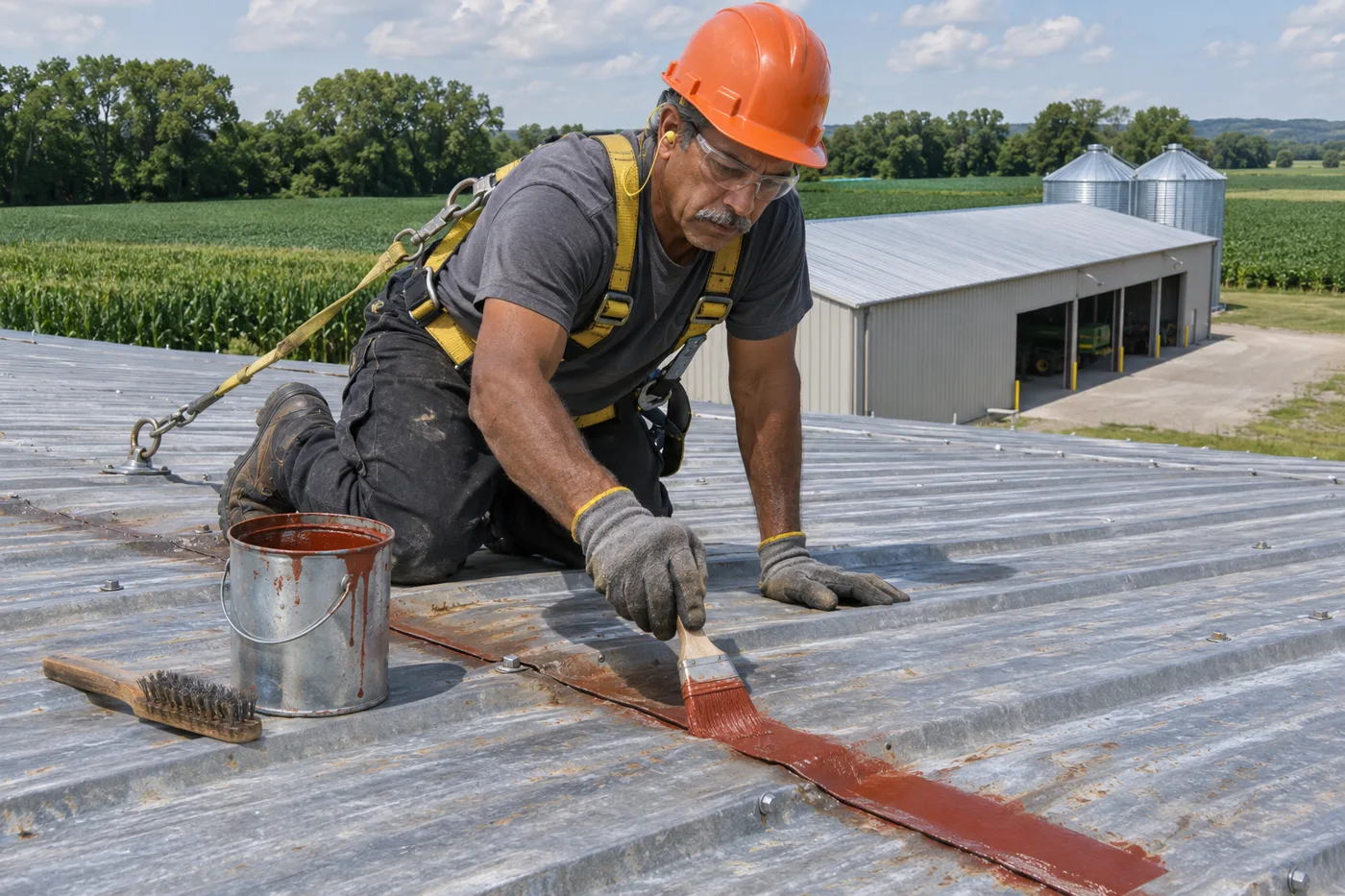
The pitched steel around a flat section gets the full screw, lap, and rust system.
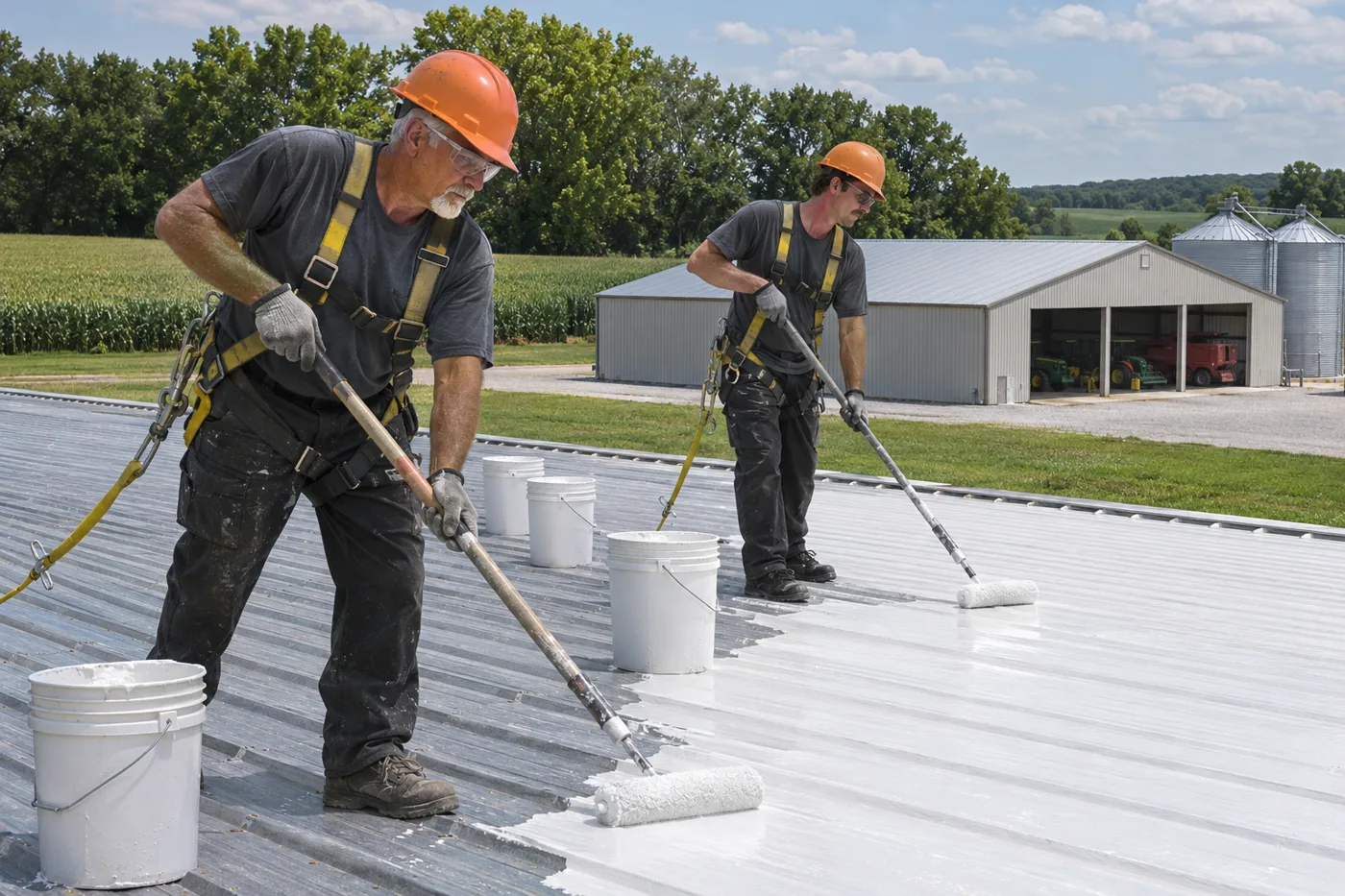
Sections that drain fast on the same building can take acrylic at a lower material cost.
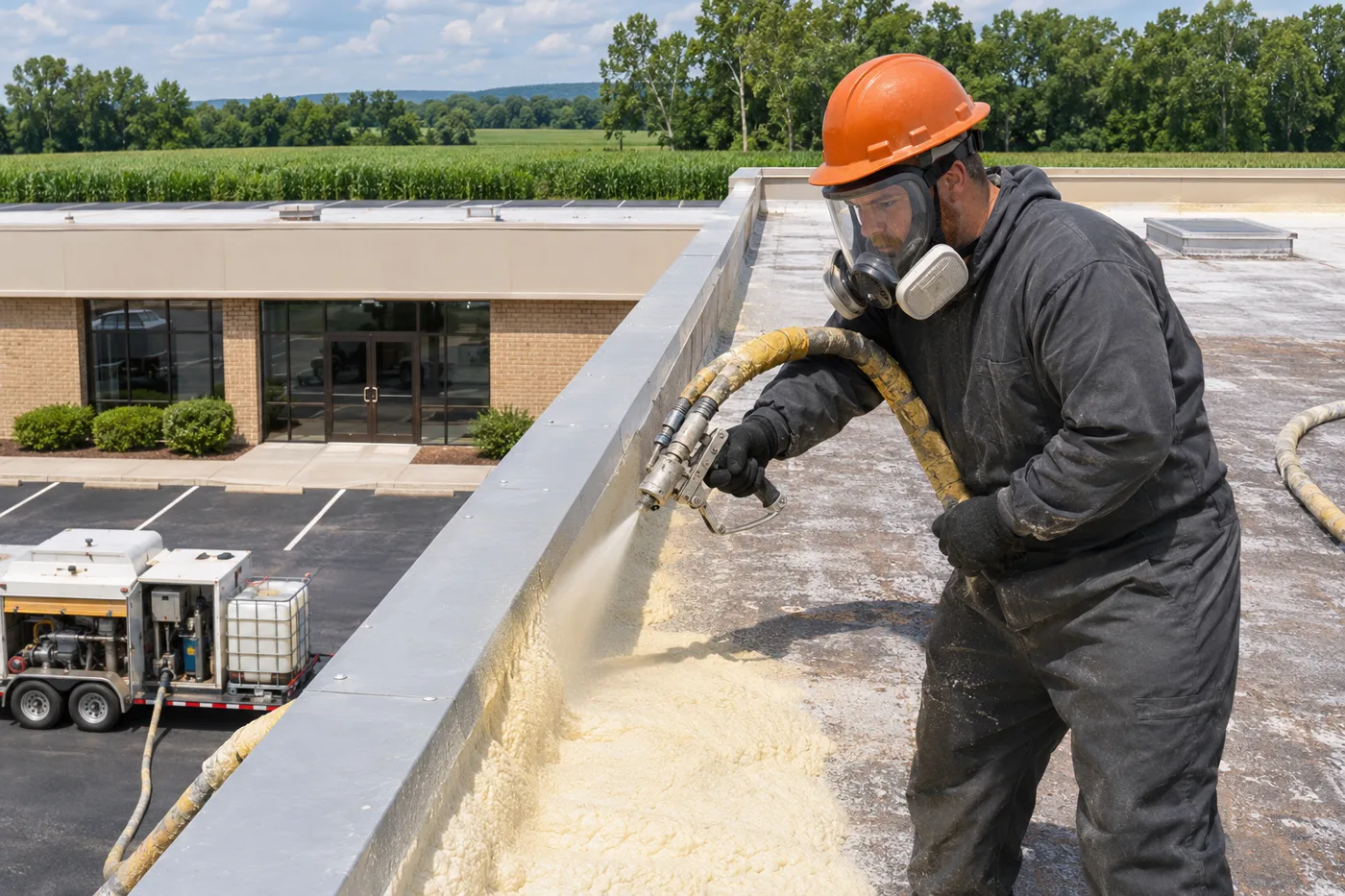
Low spots get built up with foam to move water before a silicone topcoat goes over them.
What owners ask most about silicone on flat and low-slope roofs.
It works on a washed, primed roof sprayed to full thickness. Silicone forms one continuous film that shrugs off sun and standing water. Where it fails, the cause is almost always dirt, oil, or loose rust left underneath, or a coat sprayed too thin.
Silicone handles ponding better than other coatings, but water standing for a week points to a drainage problem. We clear drains and gutters, flag sagging purlins, wait for a dry surface, and then spray extra thickness where water still collects.
Silicone cures with humidity in the air, so it tolerates cooler days than acrylic, within each product limit. The roof still has to be dry with no frost, dew, or ice. Late in the season that means spraying around midday, after we check surface temperature and dew point.
Silicone sits inside our published coating range of about $2.50 to $4.00 per square foot, compared with about $5 to $8 for replacement. Thick systems with reinforced seams land higher in that range. The final number comes after we measure and walk the roof.
Not well. Most coatings refuse to stick to cured silicone, so a silicone roof gets silicone when it is recoated. That is one reason we look at the whole building before choosing silicone for one section.
It does collect dust faster than acrylic, which dulls its white color over time. A gentle wash every few years brings back much of the brightness, and walk pads near rooftop units keep foot traffic from grinding dirt into the film.
Show us where the water sits, and we will walk the section and price silicone for it.