Drips Under Exhaust Fans
Inside The Building
Water and oily drips show up on equipment under roof fans.
On The Roof
Curb flashing has pulled loose, and process film on the curb keeps new sealant from holding.

As a Batesville metal roof coating contractor, we clean residue off manufacturing roofs, test how coatings bond, and coat the steel around production.
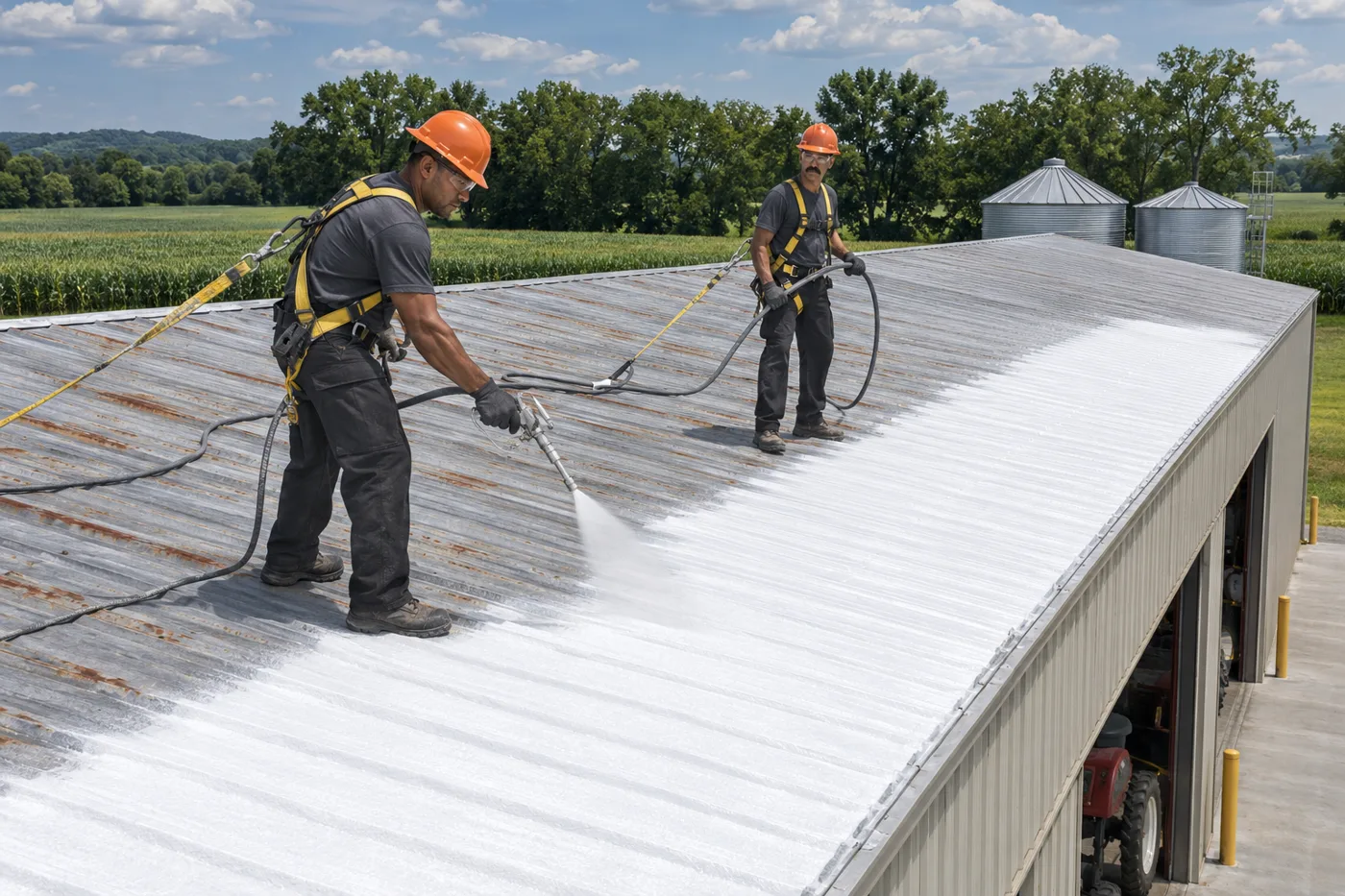
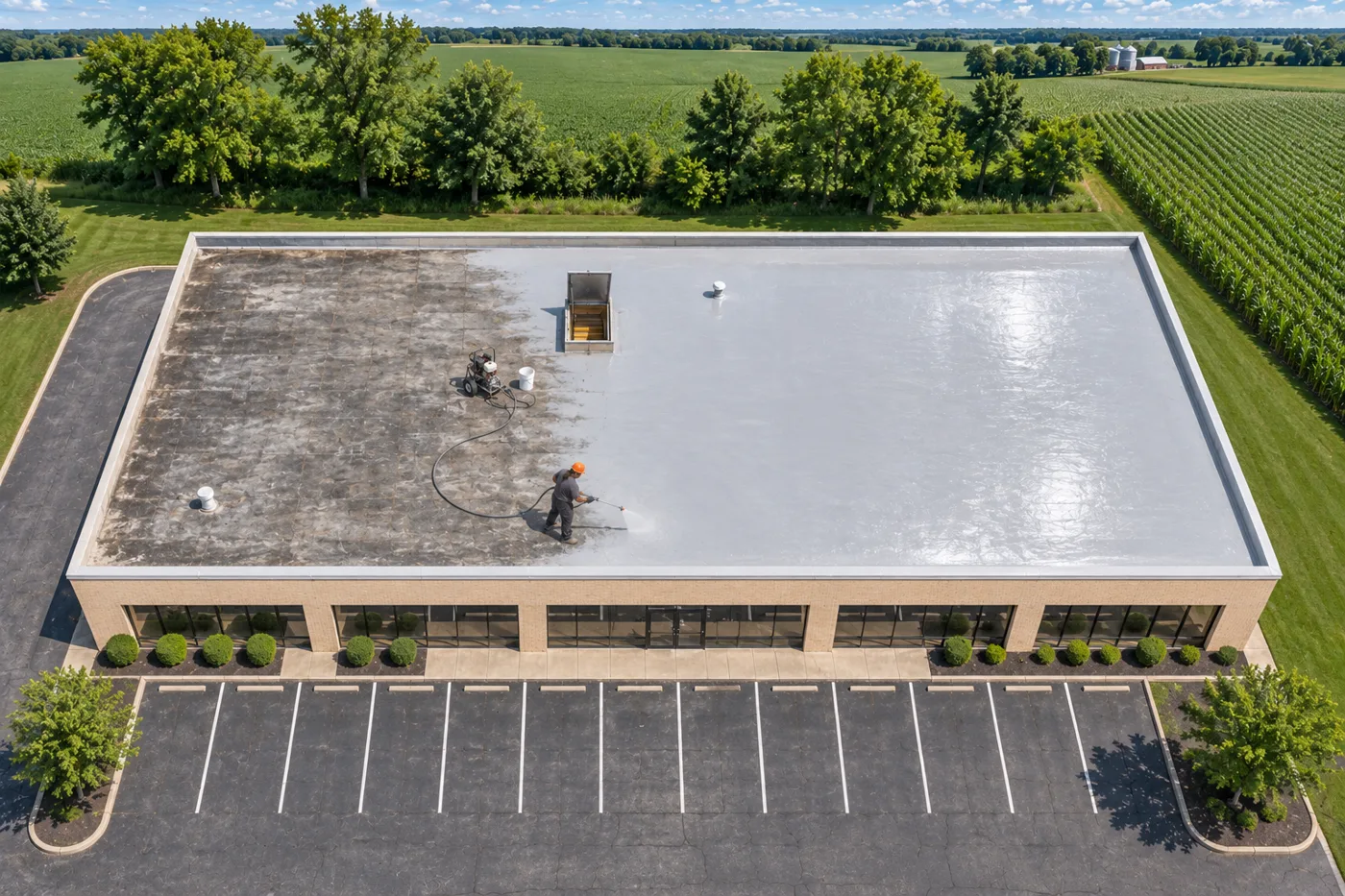
Batesville metal roof coating on manufacturing buildings depends on what blows out of the exhaust fans. Dust, oil mist, and process film settle on the panels downwind, and coatings slide off a dirty roof.
We map where residue collects, degrease those areas, and run small adhesion test patches before choosing a primer and coating for each section.
Plant roofs show these signs inside long before anyone climbs up to look.
Water and oily drips show up on equipment under roof fans.
Curb flashing has pulled loose, and process film on the curb keeps new sealant from holding.
Brown streaks run across the ceiling near the fan rows.
Residue washes off the roof surface and finds its way through open laps downwind of the fans.
Rust dust gathers on the floor in a band across the plant.
Moist exhaust settles on the panels downwind and starts rust faster there than anywhere else.
Old vent openings leak even though the equipment below is gone.
Retired curbs and pipe stubs were capped with patches that have since cracked.
Drips appear along the line where two building sections meet.
Expansion between additions has torn the transition flashing and opened the laps beside it.
Overflow pours from the gutter near dust collectors and filter housings.
Fine dust settles on the roof, washes into the gutters, and packs the downspouts until they back up.
Clean prep and coating fit these Batesville building types.
Degreased steel and tested primers give the coating a clean surface to bond to.
Retired curbs and vent stubs get removed and patched with steel before coating.
Primer and coating cover the panels where exhaust moisture starts rust first.
Sections get coated around shifts, and intake areas are scheduled with plant staff.
Each system has a role on Batesville plant and warehouse roofs.
Plant steel once residue is cleaned and tested.
Low areas near fans where water and film collect.
Clean, sloped warehouse steel with fast drainage.
Roofs crowded with pipes and vents to wrap.
Shingle roofs on front offices and break buildings.
Call and tell us which fans sit over the leaks. We will test the surface and price the cleaning and coating.
Plant roofs follow five steps, with cleaning and testing up front.
We map residue around each fan, list retired curbs, and check laps between building sections, then plan intake shutdowns with your safety staff.
Residue areas get a degreaser and a pressure wash, and test patches confirm the surface is clean.
Retired curbs and vent stubs come out, and the openings get steel patches sealed into the panels.
Fan curbs get new flashing details, screws get capped, and rust gets primed.
Sections near intakes are coated when equipment is off, and the rest goes on during normal shifts.
Your maintenance lead walks the finished roof with us, and the record lists each fan curb, patch, and coated section with thickness readings.
Running a plant outside Batesville? Call us or send us a message with the location. These are the other towns on our list.
Warehouse and plant roofs, plus dated photo checks after hail.
Shop roofs with rows of translucent skylight panels.
Roofs where dew, fog, and cool nights set the coating hours.
Long metal buildings where gutters and eaves set drainage.
What plant managers in Batesville ask about coating.
Yes. We coat steel roofs on manufacturing and warehouse buildings in Batesville. Plant roofs get coated in sections around production, with process residue washed off first so the coating bonds, and exhaust and intake areas planned before work starts.
Our published range runs about $2.50 to $4.00 per square foot to coat and about $5 to $8 to replace. Degreasing, removing retired curbs, fan flashing details, the coating system, and access around equipment move a plant roof within that range.
Most of the roof gets coated while production runs below. Sections over intakes wait for planned shutdowns, and lifts stage away from forklift and truck lanes. Your safety staff gets the daily plan before each day starts.
We run adhesion test patches on every plant roof with residue. A small area gets cleaned, primed, and coated, then pulled after it cures to confirm the bond before the full roof is done.
Yes, when the equipment under them is gone. The curb comes out, a steel patch closes the opening, and the patch gets sealed into the panels before coating covers it with the rest of the roof.
Intake units near the work area get shut down or covered during spraying, which is scheduled with your safety staff. Low-odor products go on near sensitive areas, and the sections over intakes are done when equipment is already off.
Size, residue, and the number of curbs set the schedule more than anything else. We give you a section-by-section plan after the roof walk, so production managers know which areas are affected each day and when intake shutdowns are needed.
Tell us which fans sit over the leaks, and we will walk the roof and price cleaning, repairs, and coating.