Ready For Acrylic
- Slope
- Pitched panels
- Drainage
- Water clears within minutes
- Rust
- Surface rust that primes clean
- Weather
- Warm, dry stretch in the forecast
- Next Step
- Prime, seal laps, two coats

As a Columbus acrylic roof coating contractor, we roll and spray acrylic onto primed, sloped metal roofs that shed water quickly, on warm and dry days.
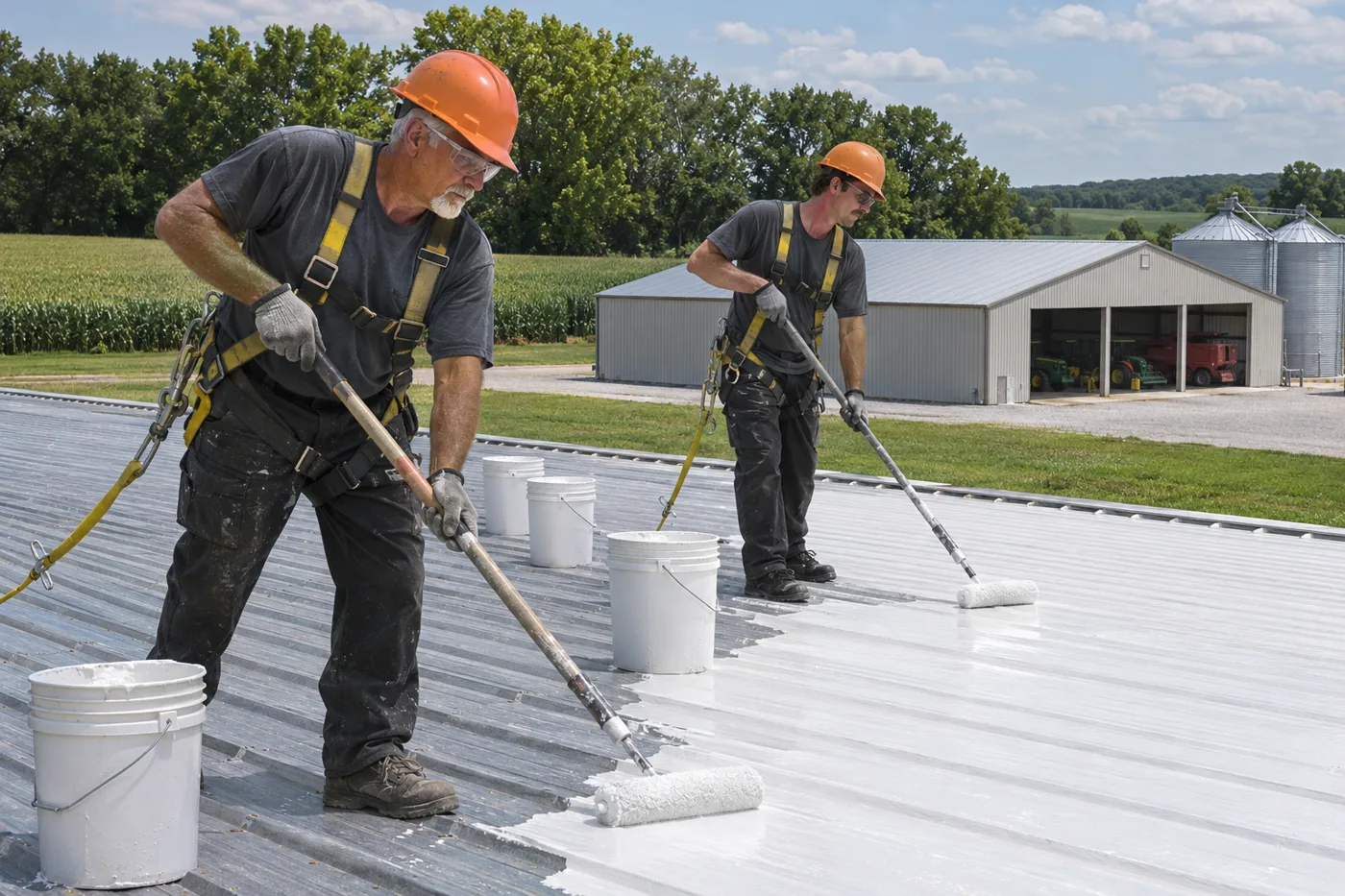
Columbus acrylic roof coating suits steel that sheds water fast. Hold your roof up against both cards below.
Sloped steel on farm and shop buildings shows these signs before acrylic goes on.
Flakes of rust land on machinery and feed bins parked under the roof.
The factory paint has worn through at the ribs, and surface rust is flaking off the underside of the panel.
Small drips line up across the building during long, soaking rains.
Neoprene washers have dried and cracked in the sun, so screws along each purlin let water in.
Afternoons inside the building run much hotter than the air outside.
A dark, chalky roof finish soaks up sun all day, and the uncoated steel passes that heat straight down.
Mud and splash marks build up along the outside walls under the roof edge.
Gutters have pulled loose or rusted through at the seams, so water spills against the wall instead of the downspout.
A dark line runs along the inside of the ridge after storms with wind.
Ridge cap screws have loosened and the foam closures under the cap have crumbled, letting blown rain in.
Gray daylight and drips show around the translucent panels in a barn or shop.
Aging skylight panels have cracked at their screws, and acrylic gets applied around them after they are replaced or resealed.
Acrylic is one of five systems for Columbus roofs. Here is where each belongs.
Full steel restoration when rust and screws lead the work.
Flat sections where rain stays put after storms.
Pitched steel that drains fast and runs hot in summer.
Shops that need insulation added over the steel.
Shingle roofs on offices or front additions.
Acrylic is a practical choice for sloped steel on these buildings.
A white acrylic topcoat reflects sun off the panels and keeps the building cooler in summer.
Acrylic costs less per gallon than silicone, which matters on large sloped roofs.
Down the road, acrylic takes a fresh acrylic coat over a washed surface.
Each screw head is capped and covered, so the rows that leaked first stay dry.
Call and describe the building. We will check the slope, screws, and rust, and tell you if acrylic fits.
Acrylic needs prep and the right weather. These five steps keep both in line.
We grade rust on each panel, check washers along every screw row, and look at ridge caps and gutters. The scope names each repair before coating.
Cracked washers mean new screws. Ridge caps get new closures and fasteners, and loose gutters are reset or replaced.
Rusty areas get wire-brushed and coated with a rust-inhibiting primer, because acrylic alone leaves active rust working underneath.
Laps, pipe boots, and curb corners get sealant and fabric so the base coat bridges solid joints.
Base coat and topcoat go on during warm, dry days, with time for each to firm up before evening dew.
When acrylic fits only part of a roof, these systems cover the rest.
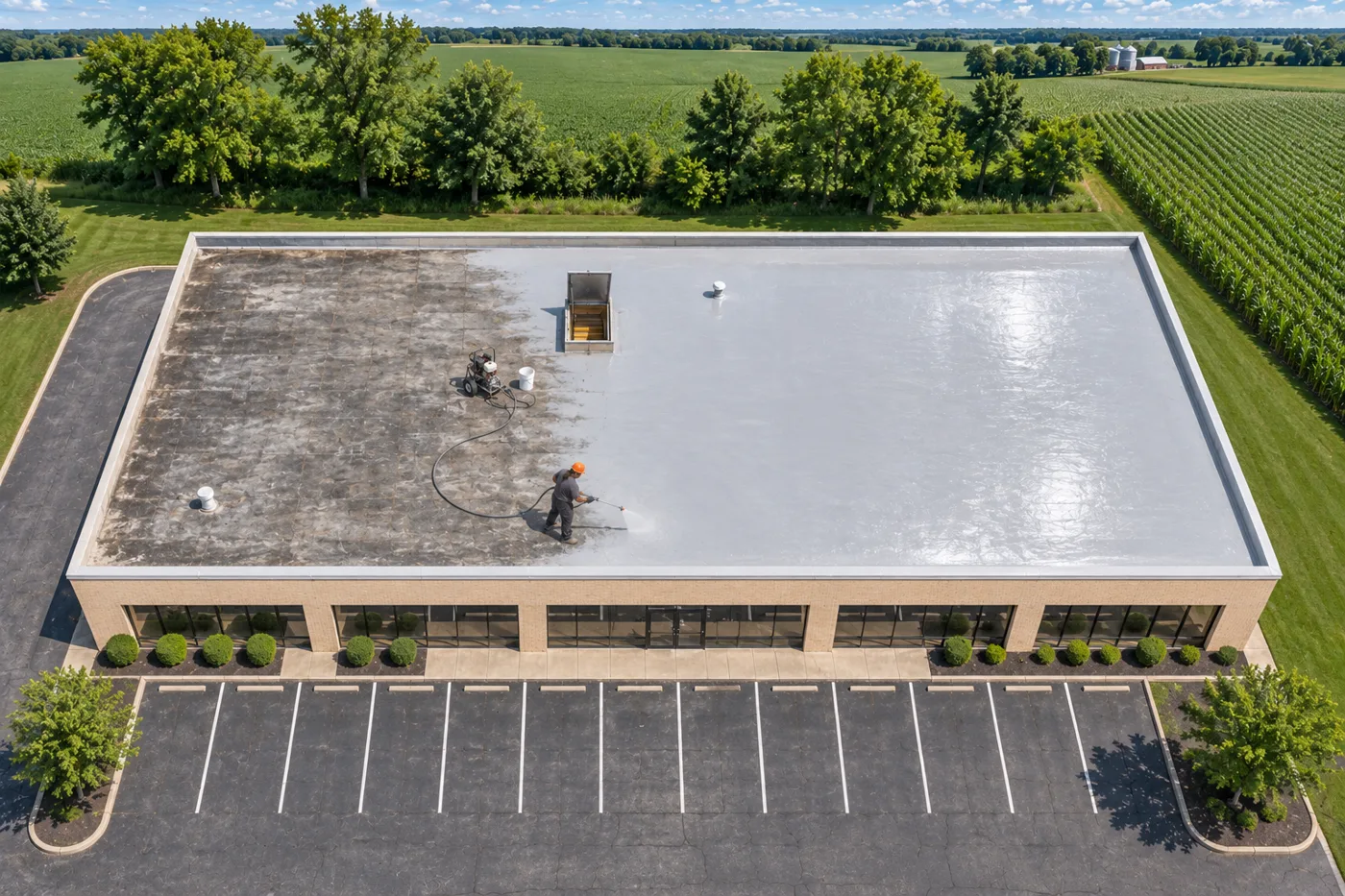
Low sections that hold water after storms take silicone instead of acrylic.
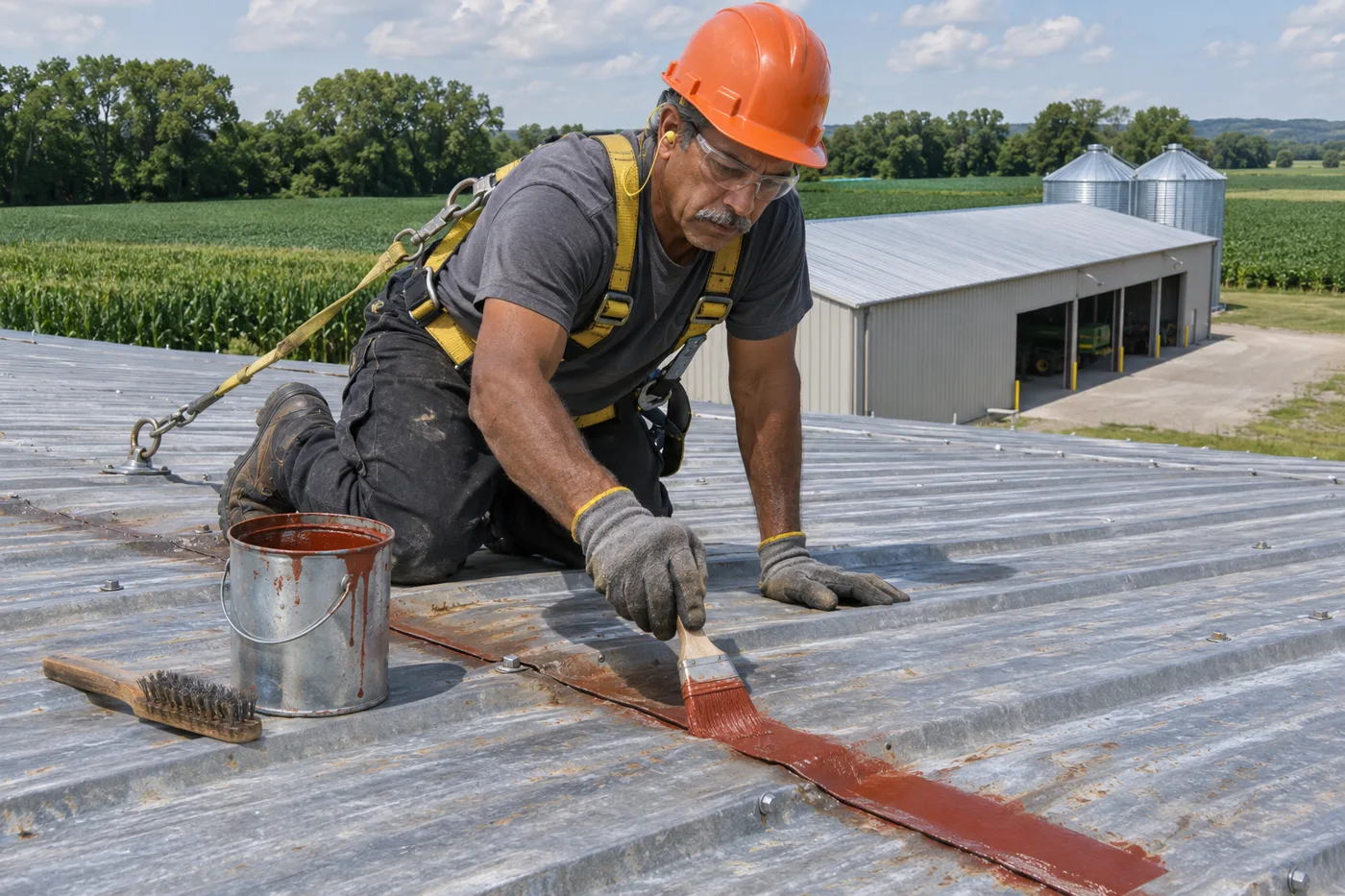
Steel roofs with heavy rust and failing screws need the full restoration system first.
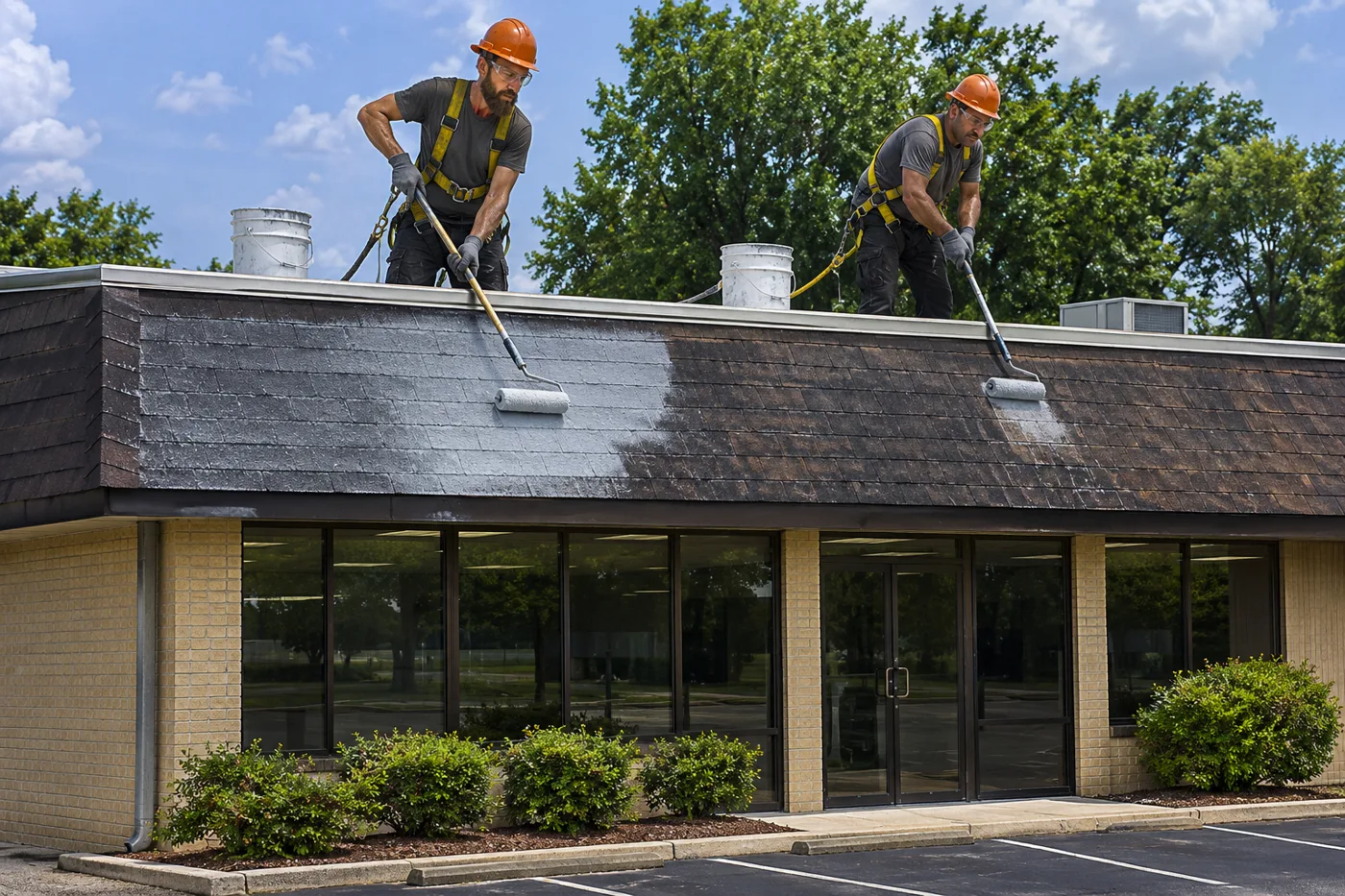
Shingle roofs on the office side of a farm business get a shingle coating product.
Straight answers about acrylic on pitched metal roofs.
It works well on farm buildings with pitched steel that drains quickly. Acrylic bonds to primed metal, seals screws and laps, and reflects sun. Rust gets a primer first, and buildings that hold water on the roof get a different system.
Each coat needs a dry day. Acrylic cures as its water evaporates, so sun, warmth, and a breeze speed it up while shade, humidity, and cool air slow it. The coat has to firm up before dew or rain arrive, which is why we schedule acrylic from late spring through early fall.
Every acrylic product lists a minimum air and surface temperature, and conditions have to stay above it until the coat sets. Spring and fall days around Columbus can feel warm at noon and cool fast after sunset, so we coat in the warm part of the day and skip days with early dew.
Acrylic falls inside our published coating range of about $2.50 to $4.00 per square foot; replacement runs about $5 to $8. Material costs less than silicone, but rust primer, the number of coats, and lap work move the total. The roof walk sets the final price.
No. Acrylic loses its grip on cured silicone and peels. A roof that already has silicone gets silicone again, and we test any unknown coating before choosing a product.
Most metal roofs get a base coat and a topcoat over primed rust and sealed laps. Some jobs add a third coat where a heavier film is needed, such as along gutters and at low spots near the eaves. Each coat dries before the next one goes on.
Tell us about the building and its slope, and we will walk the roof and price acrylic for it.